
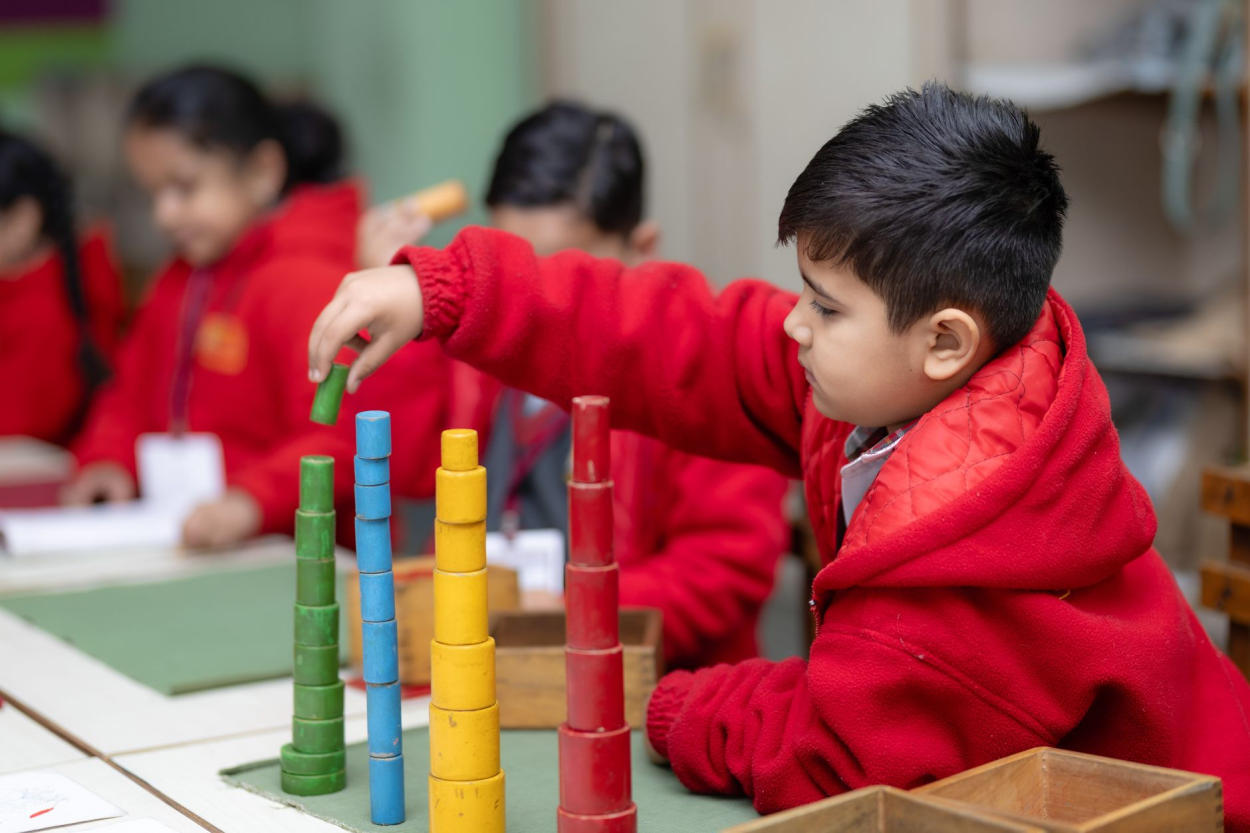
Supporting independence at home is one of the most valuable things we can do for young children. In our experience in early childhood education, children build confidence, concentration, and self-belief when they are given real opportunities to do everyday tasks for themselves. Small moments such as putting on shoes, pouring water, packing a bag, washing hands, or helping prepare a snack can become powerful learning opportunities.
At Montessori Children's House, we see independence as more than a practical skill. It is part of how children develop agency, responsibility, coordination, and a sense of belonging within family and community life. Our approach is grounded in Montessori principles and informed by the importance of responsive relationships, capable learners, and meaningful participation in everyday routines. Families who would like to learn more about our educational approach can explore our Montessori philosophy and learn more about our learning environment.
When we help children do things independently instead of doing everything for them, we are not expecting perfection. We are making room for practice. In our day-to-day work with young children, we often see that independence supports persistence, problem-solving, motor development, and emotional regulation. It also reduces some common family struggles because children are more cooperative when they feel capable and included.
From a Montessori perspective, independence grows best when the environment is prepared, expectations are realistic, and adults slow down enough to let children participate. This usually means allowing extra time, breaking tasks into manageable steps, and resisting the urge to step in too quickly.
| Strategy | What it looks like at home | Why it helps |
|---|---|---|
| 1. Create child-accessible spaces | Low hooks, reachable cups, easy-to-open baskets | Lets children act without always needing adult help |
| 2. Slow the routine down | Allow extra time for dressing and tidying | Gives children time to practice real skills |
| 3. Break tasks into steps | One part at a time for handwashing or getting dressed | Makes complex routines manageable |
| 4. Show before telling | Demonstrate quietly and clearly | Young children learn well through observation |
| 5. Use consistent routines | Same order for morning or bedtime tasks | Builds memory, confidence, and predictability |
| 6. Choose clothing and tools wisely | Easy fastenings, child-sized jugs, simple containers | Removes unnecessary frustration |
| 7. Let children help with real work | Wiping tables, watering plants, preparing snacks | Builds responsibility and belonging |
| 8. Offer limited choices | Choose between two shirts or two snacks | Supports decision-making without overwhelm |
| 9. Accept mistakes as part of learning | Spills, uneven folding, mismatched shoes | Encourages resilience and confidence |
| 10. Encourage effort over speed | Notice persistence and progress | Helps children value competence, not perfection |
We usually recommend starting with the environment. If children cannot reach what they need, independence becomes difficult before it even begins. A small stool at the sink, low hooks for bags and hats, a basket for shoes, and accessible drinkware can make an immediate difference.
In our experience, children are more likely to tidy up, get dressed, and meet basic care needs when their home environment is organised with them in mind. This does not require a full house redesign. Often, a few thoughtful adjustments are enough.
One of the biggest barriers to independence is time pressure. It is much faster for adults to zip the jacket, pour the drink, and put away the toys. But when every task is done for a child, they lose chances to practice.
We often encourage families to identify one or two parts of the day where there is enough margin for children to do more for themselves. For example, if mornings are rushed, independence practice may fit better after childcare, during weekend routines, or as part of the bedtime sequence.
Young children can become overwhelmed when we present a whole routine at once. Instead of saying, “Get ready,” we have found it is more effective to break the task into small clear actions such as: put your socks on, then your shoes, then your hat.
This approach supports success because children can focus on one movement or decision at a time. Over time, the separate steps begin to join together into an internal routine they can manage more independently.
Children learn a great deal by watching. In Montessori practice, we place strong value on calm, precise demonstration. Rather than repeating many verbal instructions, we can slowly show a child how to carry a plate, wipe a spill, hang up a jumper, or open a lunchbox.
We typically see better results when adults use fewer words and clearer actions. This helps children focus on what the hands are doing rather than trying to process too much language at once.
Consistency supports independence because children know what comes next. When tasks happen in a reliable order, children can begin to anticipate and eventually lead parts of the routine themselves.
For example, a simple after-school routine might be: shoes on the mat, bag on the hook, hands washed, lunchbox unpacked. We often see that when the sequence stays stable, adult prompting decreases over time.
Sometimes a child seems resistant when the real problem is that the task is unnecessarily difficult. Tight sleeves, complex buttons, heavy water bottles, and awkward containers can all create frustration.
We usually recommend child-friendly clothing and practical home tools that match a child’s stage of development. Shoes with manageable fastenings, a small jug for pouring, a short-handled brush, and containers that open reliably can all make independent participation more achievable.
Children often want to do what we are doing. In our setting, practical life activities are important because they allow children to contribute in meaningful ways. At home, this might include setting the table, slicing soft fruit with an age-appropriate tool, pairing socks, feeding a pet, or helping wipe a bench.
We find that real tasks usually build independence more effectively than constant entertainment. Children feel trusted when their contribution is genuine, and that trust often leads to stronger engagement and care for their environment.
Independence does not mean unlimited freedom. Young children do best with clear boundaries and manageable options. We often suggest offering two acceptable choices, such as two weather-appropriate outfits or two snack options.
This supports autonomy while keeping the routine practical. It also reduces power struggles, because the child gets to make a decision within a structure that still works for the family.
Spills, dropped pegs, backwards clothes, and uneven folding are normal parts of learning. In our experience, children become hesitant when adults rush to correct every error. They become more capable when mistakes are treated calmly and as part of the process.
We encourage parents to think in terms of progress rather than polish. A child who pours water with a small spill is still learning control. A child who takes a long time to put on a jumper is still practicing sequencing, coordination, and persistence.
When we respond only to perfect results, children may avoid difficult tasks. When we notice effort, care, and perseverance, children are more willing to keep trying. Helpful language might sound like: “You kept working until you got it on,” or “You remembered where your bag goes.”
We generally recommend praise that is specific and grounded in what the child actually did. This helps children build an internal sense of competence rather than relying only on adult approval.
We see these patterns often because they are understandable. Family life is busy, and efficiency can easily take over. Even so, small changes can create more room for capability and cooperation.
If parents want to begin simply, we usually suggest choosing just one daily routine to work on first. That might be getting dressed, preparing a snack, handwashing, or packing away belongings. Then:
Over time, these small daily opportunities add up. Children do not become independent all at once. They become independent through repetition, trust, and meaningful participation in family life.
If you would like to understand more about how our environment supports capable, confident learners, you can read about our team and approach. Families considering a visit are also welcome to contact us.
This article was produced by our internal early childhood education team at Montessori Children's House. We draw on our day-to-day experience supporting young children in an authentic Montessori environment, along with our understanding of child development, practical life learning, family engagement, and early years practice in Aotearoa New Zealand. Our editorial process focuses on practical guidance that families can use in real routines, while keeping our advice aligned with Montessori principles, respectful care, and the broader goals of early childhood learning.