
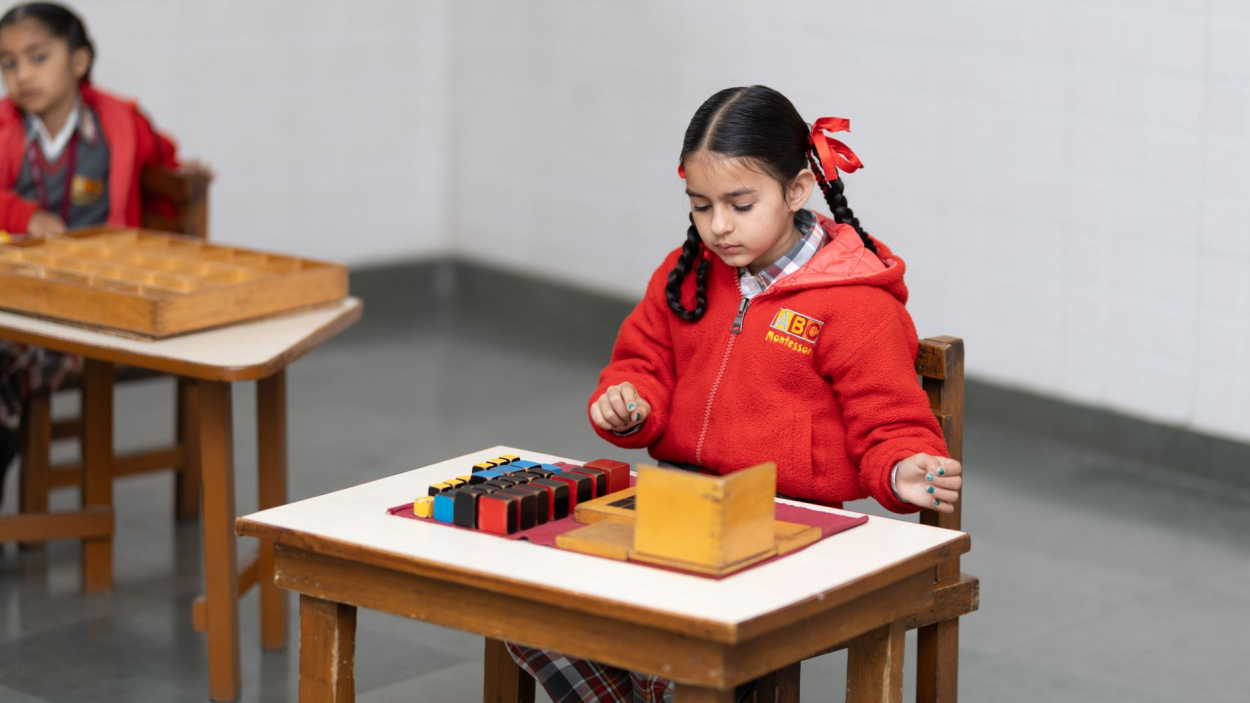
When families and early childhood educators work together, children benefit in ways that are both immediate and long term. In our experience in early childhood education, children settle more confidently, communicate more openly, and engage more deeply in learning when the important adults in their lives share understanding, goals, and trust.
Family engagement is not just about attending events or reading occasional updates. It is about building an active partnership around your child’s development, interests, routines, identity, and sense of belonging. In an authentic Montessori setting, that partnership matters because learning is most effective when the child experiences consistency between home and school. In Aotearoa New Zealand, this approach also aligns strongly with Te Whāriki, which places family and community at the heart of early childhood curriculum.
At Montessori Children’s House, we see family engagement as part of the learning environment itself. The more we understand your child’s interests, culture, strengths, routines, and emerging needs, the better we can prepare experiences that support meaningful growth. If you would like to learn more about our approach, you can explore Montessori, read about Our Place, or visit About.
Young children do not separate learning into neat categories. Their emotional security, language development, social confidence, independence, movement, curiosity, and self-regulation are all connected. That means what happens at home and what happens in an early learning environment are closely linked.
Te Whāriki describes family and community as an integral part of the early childhood curriculum, and the Ministry of Education explains that children’s learning is woven together by kaiako and whānau. We see this every day in practice. When families share what matters at home, we can respond with greater care and relevance. When educators share observations from the classroom, families often feel more confident continuing that learning at home.
In practical terms, engaged families help create stronger continuity for children. If a child is learning to dress independently, use respectful language, care for belongings, manage separation, or develop concentration, progress is usually smoother when the expectations around that learning are supported in both places.
Children learn best when they feel secure. When we build strong relationships with whānau, children see that home and centre are connected, trusted spaces. That sense of emotional safety supports exploration, confidence, and willingness to participate.
This is especially important during transitions, such as starting care, moving between age groups, or preparing for school. A child who sees regular communication and shared trust between family and educators is often better able to adapt to change.
Consistency is one of the biggest benefits of family engagement. In our experience, children thrive when adults use similar approaches to routines, boundaries, independence, and communication. That does not mean home and centre need to look identical. It means the child receives a coherent message about what is expected and what support is available.
For example, if we are encouraging a child to pour their own water, return materials to the shelf, take turns in conversation, or persist with a task, families can reinforce those same habits at home in simple, manageable ways.
Families are the child’s first teachers. They bring language, culture, values, stories, and aspirations that no curriculum can replace. When whānau share these with us, it strengthens the child’s sense of identity and belonging.
In a New Zealand context, this matters deeply. Te Whāriki expects local curriculum to reflect the children and families in the setting, including their language, culture, identity, and aspirations. We view family engagement as one of the most important ways to make learning respectful, responsive, and authentic rather than generic.
Parents and caregivers often notice subtle changes before anyone else does. A poor night’s sleep, a new sibling, a recent move, toilet learning, food changes, illness recovery, or a developing interest can all shape a child’s day. When families share these details, we can adjust our support and expectations appropriately.
Likewise, when we share observations with families, they gain a clearer picture of how their child is growing socially, emotionally, physically, and academically. This two-way flow helps everyone make better decisions around the child’s care and learning.
One of the strongest outcomes of family engagement is that learning continues naturally beyond the centre. This does not require formal lessons at home. In fact, for young children, meaningful home learning often looks very simple: conversation, practical life tasks, reading together, unhurried routines, outdoor time, and opportunities for responsibility.
Public research on parental engagement consistently points to the value of parent involvement in supporting children’s learning. We interpret this in early childhood as a reminder that everyday family interactions matter. Talking, listening, inviting participation, and noticing effort all contribute to a child’s development.
Family engagement is most effective when it is regular, practical, and respectful of real family life. It does not need to be elaborate. In our experience, the strongest partnerships are built through small, consistent actions over time.
In Montessori environments, we often find that family engagement is especially powerful when it supports independence. When home routines allow children time to try, repeat, help, and participate, the child often becomes more capable and confident across settings.
Many families care deeply about their child’s learning but worry they are too busy to be fully involved. We want to be clear: meaningful engagement does not require perfection, extra pressure, or constant availability.
Some of the most common barriers include time constraints, different work schedules, uncertainty about what to ask, language differences, and the feeling that early learning is something professionals manage on their own. We do not see family engagement that way. Our role is to make participation approachable and useful.
In practice, that means communication should be clear, welcoming, and realistic. Families should be able to contribute in ways that suit their lives. A short conversation at drop-off, a response to a learning update, a shared observation from the weekend, or a question about a new behaviour can all be meaningful forms of engagement.
We also find it helpful to avoid turning family engagement into performance. Children benefit more from calm, genuine connection than from pressure to complete activities or achieve visible outcomes. Our team typically encourages parents to focus on responsive everyday interactions rather than trying to recreate a classroom at home.
| Area | How family engagement helps | What this can look like |
|---|---|---|
| Emotional security | Creates trust and smoother transitions between home and centre | Consistent routines, shared settling strategies, open communication |
| Independence | Reinforces self-help and responsibility across settings | Allowing time for dressing, tidying, carrying, pouring, and practical tasks |
| Language and communication | Strengthens vocabulary, expression, and confidence | Talking about the day, reading together, sharing home language and stories |
| Identity and belonging | Helps children feel seen, respected, and connected to their culture and family | Sharing family traditions, values, aspirations, and cultural practices |
| Learning continuity | Supports steady progress through shared goals and observations | Discussing interests, routines, challenges, and developmental milestones |
| Wellbeing | Helps educators respond appropriately to changes in the child’s life | Updating kaiako about sleep, illness, family changes, or new needs |
If you want to strengthen your involvement in your child’s early learning, we usually recommend starting with a few simple habits rather than trying to do everything at once.
If you are considering a setting where partnership with families is valued, we welcome you to contact us and learn more about how we work alongside whānau to support each child’s growth.
This article was produced by our internal early childhood education team at Montessori Children’s House. Our editorial approach draws on day-to-day experience supporting tamariki and whānau in an authentic Montessori environment, alongside curriculum knowledge informed by Te Whāriki and the realities of partnership-based early learning in Aotearoa New Zealand. We write from practice, observation, and ongoing professional reflection so families receive guidance that is useful, grounded, and relevant to real early childhood settings.