
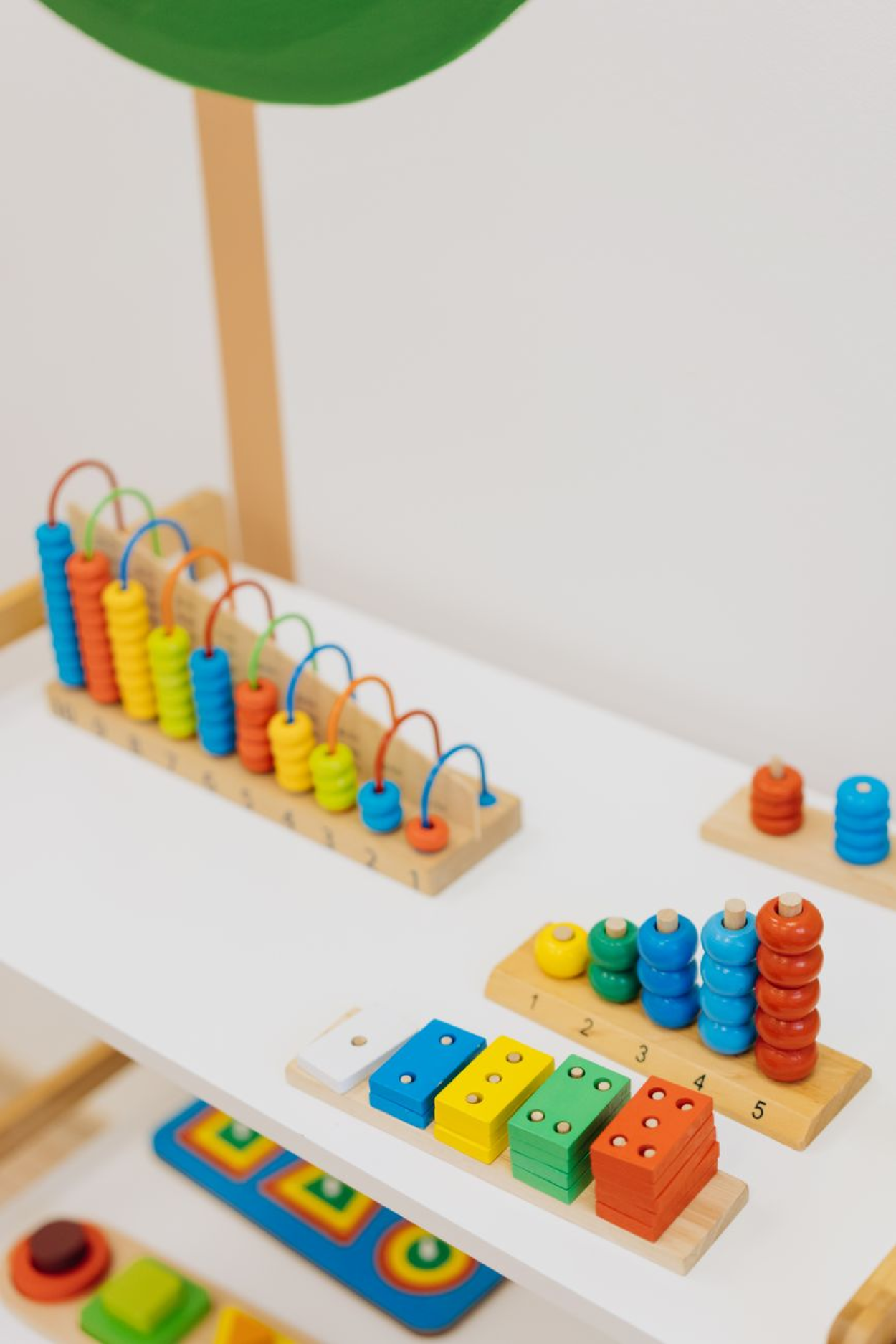
At Montessori Children’s House, we see concentration, calm and self-motivation as closely connected. When tamariki are given a thoughtfully prepared environment, purposeful materials, and the freedom to make age-appropriate choices, they often become more settled in themselves and more engaged in their learning. This is one of the most distinctive strengths of Montessori education.
Families sometimes assume that concentration has to be “taught” through constant adult direction. In our experience, the opposite is often true. Young children concentrate best when we remove unnecessary distractions, protect uninterrupted work time, and offer activities that match their stage of development. In an authentic Montessori environment, this process is intentional rather than accidental.
Concentration is not just about sitting still. For young children, it is part of how they build independence, persistence, emotional regulation and confidence. Te Whāriki describes early learning as supporting children to become confident learners for life, with social, emotional, cultural and exploratory learning woven together. That matters because focus and self-regulation do not develop in isolation; they grow through relationships, environment, meaningful activity and repeated practice.
We typically see that when a child can focus deeply on one task at a time, several positive things follow: they are less reliant on constant adult prompting, they begin to experience satisfaction from effort, and they become more willing to return to challenging work. Over time, this can look like calmness from the outside, but underneath it is really growing internal organisation.
One of the core Montessori ideas is the prepared environment. This means the space is designed for the child, not for adult convenience alone. Materials are accessible, orderly and purposeful. Furniture is child-sized. Each activity has a clear place. There is enough structure to feel secure, but enough freedom to allow real choice.
In our experience, calm does not usually come from telling children to be quiet. It comes from helping them feel oriented, capable and emotionally safe in their surroundings. When children know where things belong, how to begin, and what is expected, they spend less energy on confusion and more energy on meaningful work. This is one reason families often notice that Montessori spaces feel peaceful.
If you would like to understand more about how the physical setting shapes children’s independence and focus, our learning environment offers an important part of that picture.
Montessori is sometimes misunderstood as complete freedom. In practice, we work with freedom within limits. Children are free to choose from appropriate activities, to repeat work, to move with purpose and to develop at their own pace. At the same time, there are consistent boundaries: respecting others, caring for materials, and using the environment responsibly.
This balance matters. Self-motivation is strongest when children experience that their choices have meaning. If every action is directed by an adult, the child can become dependent on praise, reminders or correction. If there are no limits at all, the environment can become chaotic and dysregulating. We often find that motivation grows best in the middle ground: clear expectations, real choice and meaningful responsibility.
Montessori sources commonly describe discipline as something that develops from within the child rather than being imposed externally. We have found this to be true in day-to-day practice. Children become more self-directed when they can make manageable decisions, complete real tasks, and experience the natural satisfaction of mastery.
Young children often need repetition far more than adults expect. A child may choose the same activity again and again, not because they are stuck, but because they are building coordination, understanding and confidence. In Montessori, repetition is not treated as a problem to fix. It is often a sign that important development is taking place.
We also protect uninterrupted work periods because concentration is fragile, especially in the early years. When a child is frequently interrupted, redirected or moved on too soon, deep engagement is harder to achieve. When given time, many children settle into work more fully than adults initially imagine possible.
Order supports this process too. External order often helps children develop internal order. Predictable routines, clearly arranged materials and consistent expectations can reduce friction and support emotional steadiness. This does not mean a child never experiences frustration; rather, the environment helps frustration become manageable and productive.
In a Montessori setting, concentration does not always look the same from one child to another. One child may carefully polish a table, another may build language through matching cards, and another may repeat a practical life activity until movements become controlled and precise. The common thread is purposeful engagement.
When children enter sustained concentration, we often notice several patterns:
Community discussions among Montessori practitioners frequently point to the same tradeoff: concentration grows when adults step back thoughtfully, but that does not mean becoming passive. The adult’s role is active in observation, preparation and timing. We prepare the conditions, present materials carefully, and intervene when needed, but we try not to interrupt productive effort unnecessarily.
As an early childhood setting in Aotearoa New Zealand, we value the way Montessori principles can sit alongside Te Whāriki. Te Whāriki emphasises wellbeing, belonging, contribution, communication and exploration. In our experience, concentration and calm are strengthened when children feel secure in their relationships, connected to their environment, and respected as capable learners.
Self-management and regulation are also part of the broader picture in Te Whāriki. Montessori contributes to this through everyday lived practice: choosing work, completing a cycle of activity, returning materials, waiting, observing others, caring for the environment and participating in a calm social community. These are not abstract lessons. They are habits built through repeated experience.
You can read more about our philosophy and approach on our About us page.
| Montessori element | How it supports the child | Likely outcome over time |
|---|---|---|
| Prepared environment | Reduces confusion and makes work accessible | Greater calm and independence |
| Freedom within limits | Allows meaningful choice within clear boundaries | Stronger self-motivation and responsibility |
| Uninterrupted work time | Protects the child’s ability to focus deeply | Longer concentration and persistence |
| Repetition | Supports mastery, coordination and confidence | More resilience and satisfaction in effort |
| Order and routine | Creates predictability and emotional security | Better self-regulation and steadiness |
Families often ask how they can support these same qualities at home. We usually recommend a few simple, realistic starting points:
These changes do not need to be perfect to be effective. In our experience, consistency matters more than complexity. Small daily habits often do more for concentration and inner calm than constant entertainment or over-scheduling.
If you would like to explore whether our setting may be a good fit for your child, you are welcome to contact us.
This article has been produced by our internal Montessori Children’s House team. Our editorial approach draws on day-to-day experience in early childhood education, practical observation of children in Montessori environments, and ongoing review of recognised curriculum and Montessori guidance. We write from the perspective of practitioners who work with tamariki and whānau, with a focus on clear, trustworthy, experience-based guidance that reflects both authentic Montessori principles and the New Zealand early learning context.