
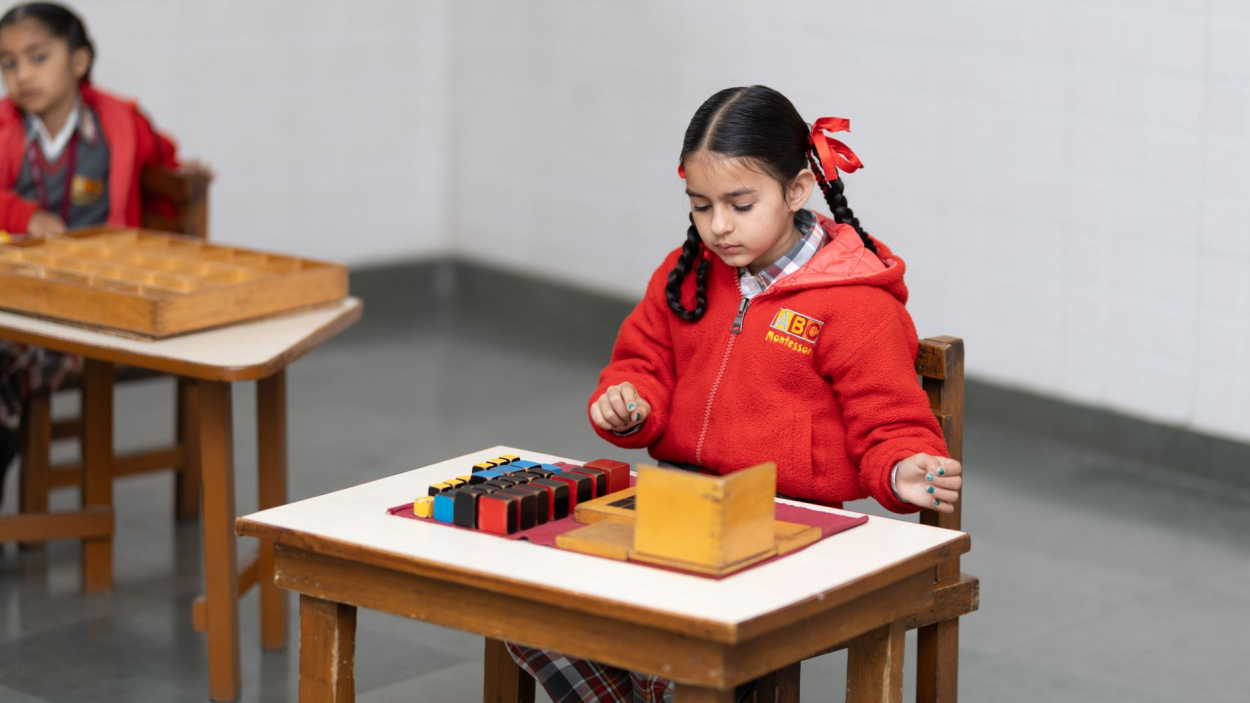
One of the most meaningful changes we see in Montessori settings is a child beginning to say, in effect, “I can do it myself.” For toddlers and preschoolers, independence is not just about completing a task alone. It is about building confidence, concentration, self-respect, and a genuine sense of capability. In our experience, children thrive when we prepare an environment that fits their developmental stage and then give them the time, space, and calm guidance to participate fully in everyday life.
At Montessori, independence is encouraged through purposeful routines, hands-on materials, practical responsibilities, and respectful relationships. Our environment and approach are also shaped by Aotearoa New Zealand’s early childhood curriculum, Te Whāriki, alongside our commitment to the Treaty of Waitangi. That means we do not see independence as isolation. We see it as growing competence within connection, belonging, contribution, and care for others.
During the toddler and preschool years, children are strongly motivated to act on their world. They want to carry, pour, wash, dress, choose, repeat, tidy, and help. When we support these drives rather than rushing past them, children steadily develop self-help skills, coordination, persistence, and trust in their own abilities.
We often see that independence reduces frustration as well. A child who can hang up a bag, put on shoes, wash hands, choose work, and return materials is usually more settled and engaged. Over time, these small acts of competence support emotional regulation and social confidence because the child experiences themselves as an active participant rather than a passive recipient of adult direction.
Montessori encourages independence by matching the environment to the child. Instead of expecting young children to adapt to an adult-sized world, we prepare spaces, routines, and materials that allow them to participate successfully. In practice, this usually includes low shelves, child-sized furniture, clearly defined work areas, consistent routines, and activities arranged from simple to more complex.
We also give children real tasks with real purpose. Rather than relying only on entertainment-based activities, we invite children into meaningful work such as food preparation, tidying, dressing practice, plant care, and grace-and-courtesy routines. These experiences help children feel trusted and useful, which is a major driver of independence.
Families who want to understand this approach more deeply can explore our page on Montessori and learn more about Our Place, where the environment itself supports confident participation.
In an authentic Montessori setting, Practical Life is usually the clearest pathway to independence for toddlers and preschoolers. This area includes care of self, care of the environment, movement, food preparation, and social habits. From an adult perspective, these tasks can appear simple. From the child’s perspective, they are powerful opportunities to build mastery.
Some of the most independence-building experiences we use include:
What matters most is not speed. It is repetition, order, and success. We typically slow ourselves down so children can complete each step. That patience is often what allows genuine independence to emerge.
We cannot reasonably expect independence if the environment constantly creates barriers. For young children, even small obstacles matter: hooks that are too high, baskets that are too heavy, shelves that are cluttered, or routines that change too often. Montessori addresses this by preparing the environment very intentionally.
In our experience, independent behaviour grows best when children can clearly see what is available, reach it safely, use it with purpose, and return it to its proper place. This is one reason order is so important in Montessori. Order helps children understand the environment, anticipate what comes next, and act successfully without relying on constant adult correction.
If you would like to learn more about our setting and how it supports young children day to day, our About page and Our Place page give useful context.
A common misunderstanding is that independence means children can do whatever they want. In Montessori, that is not how we work. Independence grows within clear, predictable limits. Children are free to choose from appropriate activities, move with purpose, repeat work, and participate in routines, but always within boundaries that protect safety, respect, and the community.
We find that these limits actually make independence stronger. Children feel more secure when expectations are consistent. They learn that choice comes with responsibility: using materials carefully, returning them ready for the next person, respecting others’ concentration, and caring for shared spaces. This is one of the key differences between simple freedom and developmental freedom.
Independence is not only about self-care tasks. It also includes the ability to function socially with growing confidence. For toddlers and preschoolers, this can mean greeting others, asking for a turn, expressing a need, waiting briefly, helping a younger child, or resolving small conflicts with guidance.
We often see social independence develop alongside practical independence. A child who feels competent in the environment is usually more willing to engage with peers and communicate needs calmly. Grace and courtesy lessons are especially valuable here because they help children practise respectful participation in a shared community.
As an early childhood service in Aotearoa New Zealand, we see strong alignment between Montessori independence and Te Whāriki. Independence connects closely with empowerment, holistic development, family and community, and relationships. It also sits naturally within strands such as wellbeing, belonging, contribution, communication, and exploration.
For example, when a child manages personal care, carries out a classroom responsibility, or makes a thoughtful choice of work, they are not only becoming more self-reliant. They are also participating in the life of the community, building confidence as a learner, and developing trust in their own capabilities. In our experience, the most meaningful independence is always relational as well as practical.
Families do not need to recreate a classroom to support independence. The most effective changes at home are usually simple and consistent. We often recommend starting with one or two routines and making them easier for the child to manage successfully.
We also encourage families to observe before helping. Often a child needs a few extra seconds, not immediate rescue. That pause can make a big difference.
| Montessori element | What it looks like | How it supports independence |
|---|---|---|
| Prepared environment | Low shelves, accessible materials, child-sized furniture, orderly layout | Children can find, use, and return what they need with less adult help |
| Practical Life | Pouring, dressing, cleaning, food preparation, caring for the environment | Builds self-help skills, coordination, confidence, and responsibility |
| Freedom within limits | Choice among appropriate activities with clear expectations | Teaches decision-making, self-discipline, and respect for others |
| Repetition | Children repeat meaningful tasks many times | Strengthens mastery, concentration, and persistence |
| Grace and courtesy | Modelling greetings, turn-taking, helping, and respectful communication | Develops social independence and community awareness |
| Adult role | Observing, demonstrating, then stepping back | Gives children space to practise and succeed for themselves |
If we had to simplify Montessori independence into a few practical principles, they would be these:
When we help young children build independence, we are not pushing them away from adults. We are giving them the confidence to participate more fully in family life, classroom life, and the wider world. That confidence often begins with very small moments, such as hanging up a bag, pouring a drink, choosing a piece of work, or helping a friend.
If you would like to talk with us about how this looks in practice in our preschool setting, you are welcome to contact us.
This article was produced by our internal Montessori Children’s House editorial team in collaboration with educators and practitioners involved in early childhood education and childcare. We write from the perspective of a team working within authentic Montessori practice in Miramar, Wellington, informed by day-to-day experience with toddlers, preschoolers, prepared environments, family communication, and curriculum-aligned teaching. Our process combines operational experience, Montessori principles, and careful review of relevant public guidance so families receive practical, trustworthy information.