
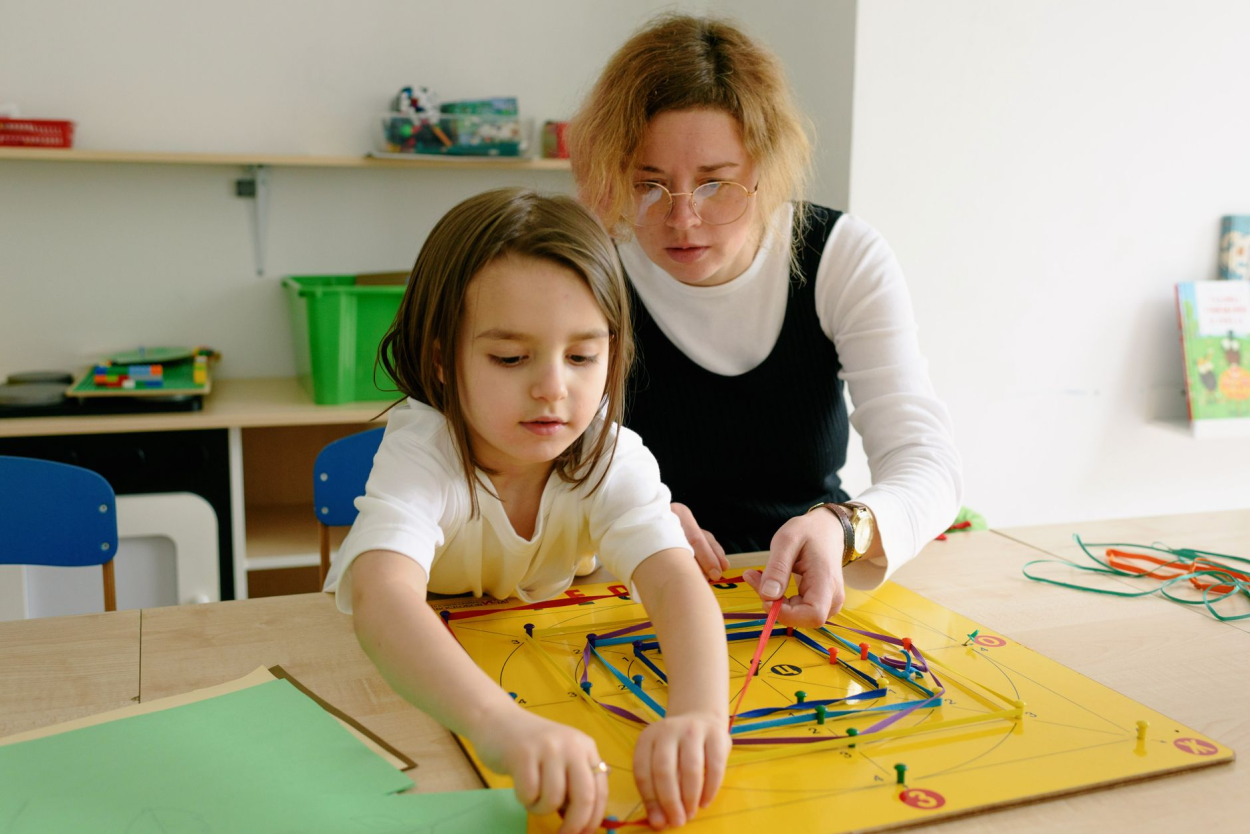
In our experience working with preschool-aged children, independence does not appear all at once. It is built gradually through repetition, order, movement, and meaningful responsibility. That is exactly why Practical Life is such a central part of Montessori education.
At our Montessori programme, we use Practical Life activities to help children learn how to care for themselves, care for others, and care for their environment. These experiences may look simple to adults: pouring water, washing hands, buttoning a shirt, sweeping a floor, preparing a snack, or returning materials to the shelf. But in practice, these tasks do important developmental work. They help children experience competence, build confidence through real achievement, and reduce unnecessary dependence on adults.
For preschoolers, that growing sense of "I can do it myself" is not just emotionally satisfying. It is foundational for self-regulation, concentration, participation in group life, and readiness for more complex learning later on.
In Montessori, Practical Life refers to real, purposeful activities drawn from everyday living. The American Montessori Society describes Practical Life as the area where children learn daily life skills such as dressing, preparing snacks, setting the table, and caring for plants and animals, while also developing independence and motor coordination. In Montessori settings, these activities are not an extra. They are a core part of the early childhood environment.
We see Practical Life as the child’s bridge between dependence and capability. Instead of doing everything for a child, we prepare the environment so they can do more for themselves. That includes child-sized tools, clear routines, consistent expectations, and enough time to practise without being rushed.
If you would like to understand the wider philosophy behind this approach, you can read more about Montessori and how it supports self-directed learning in the early years.
Independence in early childhood is often misunderstood. It does not mean expecting a young child to manage alone without support. In our practice, independence means helping children do what they are developmentally ready to do with increasing confidence, coordination, and responsibility.
That matters because preschoolers are building much more than isolated skills. They are forming habits of attention, persistence, self-help, and social contribution. When a child learns to put on their own shoes, wash their hands properly, carry a tray carefully, or tidy their workspace, they are learning that their actions have purpose and effect.
We often see that children become calmer and more settled when they can participate actively in their day rather than waiting for adults to manage every step. Montessori organisations also consistently describe independence as a natural developmental outcome supported by Practical Life work, especially in the early years.
From a New Zealand early childhood perspective, this also aligns well with Te Whāriki. The Ministry of Education explains that Te Whāriki is designed to weave together the full range of children’s learning experiences so they become confident learners for life. In our view, Practical Life strongly supports this by giving children repeated opportunities to build capability, belonging, contribution, and active exploration in everyday routines.
Many adult tasks are difficult for young children because they involve multiple hidden steps. Montessori helps by isolating and sequencing those steps. Pouring, folding, handwashing, food preparation, dressing frames, and table washing all have a beginning, middle, and end.
We typically present one clear process at a time, then allow the child to repeat it. This structure helps children understand what success looks like and gives them a path to achieve it independently.
Independence is not only about willingness. It also depends on physical ability. Practical Life work helps children refine grip strength, hand-eye coordination, balance, bilateral coordination, and controlled movement. These physical foundations support everyday self-care as well as later classroom tasks.
In our experience, a child who can carry, pour, spoon, fasten, wipe, and scrub with control often becomes more confident across the whole learning environment.
One of the most valuable outcomes we see is sustained concentration. Because Practical Life tasks are real and meaningful, children are often deeply motivated to repeat them. Repetition is not a sign that the child is "stuck." It is often the mechanism through which mastery develops.
Montessori education emphasises that movement and learning are closely connected. Practical Life channels that natural drive into ordered activity, which supports longer attention spans and more independent work habits over time.
When adults step in too quickly, children can begin to assume that help will always arrive before effort is required. We try to avoid that pattern. Instead, we observe carefully, prepare the environment, and offer support only as needed.
That does not mean leaving children to struggle unnecessarily. It means giving them the chance to attempt, adjust, and succeed. Over time, children begin to trust their own capability.
Independence in Montessori is never only individual. Practical Life also teaches children that they can help maintain a shared environment. Watering plants, wiping a table, setting out snack items, or returning materials neatly to the shelf all communicate the same message: your actions matter here.
This is one reason Practical Life often has such a strong effect on confidence. The child is not merely occupied. The child is participating.
The exact activities vary by setting and by the child’s stage of development, but we commonly see strong independence-building value in the following types of work:
These may sound ordinary, but that is the point. Practical Life gives children structured access to the real tasks that make daily life work.
Families who want to picture how environment influences independence may also find it helpful to explore our prepared environment, because order, accessibility, and child-sized materials make a major difference.
As an early childhood setting in Aotearoa New Zealand, we view Montessori practice alongside Te Whāriki and the values that shape high-quality early learning here. Practical Life supports several strands in a very practical, observable way.
In our experience, this alignment matters because independence is not only a personal skill. It is also a social and cultural experience. Children become more secure when they know how to participate meaningfully in the shared life of the centre.
When Practical Life is working well, families often tell us they notice changes beyond the classroom. A child may insist on carrying their own bag, pouring their own drink, helping to wipe the table, or putting shoes away without prompting. These moments can be slower than doing the task for the child, but they are often signs of real developmental progress.
We also find that independence at home tends to grow best when adults make a few simple environmental adjustments:
This is one of the most practical lessons we have learned over time: children are far more likely to act independently when the environment is designed to support success.
Not at all. Independence develops progressively. A child may still need modelling, reminders, or partial assistance while becoming increasingly capable.
We do not see it that way. Practical Life certainly includes real work, but its purpose is broader. It helps children coordinate movement, sequence actions, build concentration, and experience themselves as competent contributors.
In our experience, children benefit most when foundational capabilities come first. A child who can focus, follow a process, care for materials, and act with increasing self-direction is often better prepared for later literacy, numeracy, and collaborative learning.
| Practical Life area | Example activity | What the child is developing | How this supports independence |
|---|---|---|---|
| Care of self | Handwashing, dressing, food serving | Self-help skills, sequencing, body control | Children rely less on adults for everyday routines |
| Care of environment | Sweeping, wiping tables, watering plants | Responsibility, order, follow-through | Children see themselves as capable contributors |
| Control of movement | Pouring, spooning, carrying trays | Coordination, precision, concentration | Children gain the physical control needed to act independently |
| Grace and courtesy | Greeting, waiting, offering help | Social awareness, self-regulation, communication | Children manage more of their interactions constructively |
| Work cycle habits | Choosing, completing, and returning an activity | Initiative, persistence, order | Children begin to manage tasks from start to finish |
If you want to support preschool independence in a Montessori-informed way, we recommend starting small and staying consistent.
If you are exploring what this looks like in an authentic early childhood setting, you can learn more about our approach or get in touch with our team.
This article was produced by our internal early childhood education team at Montessori Children's House. We write from the perspective of practitioners working in Montessori preschool and childcare, informed by day-to-day observation of young children, prepared-environment practice, and the expectations of high-quality early learning in Aotearoa New Zealand. Our editorial approach combines operational experience, Montessori subject knowledge, and careful review of reputable public sources so that families receive guidance that is practical, trustworthy, and grounded in real early childhood practice.