
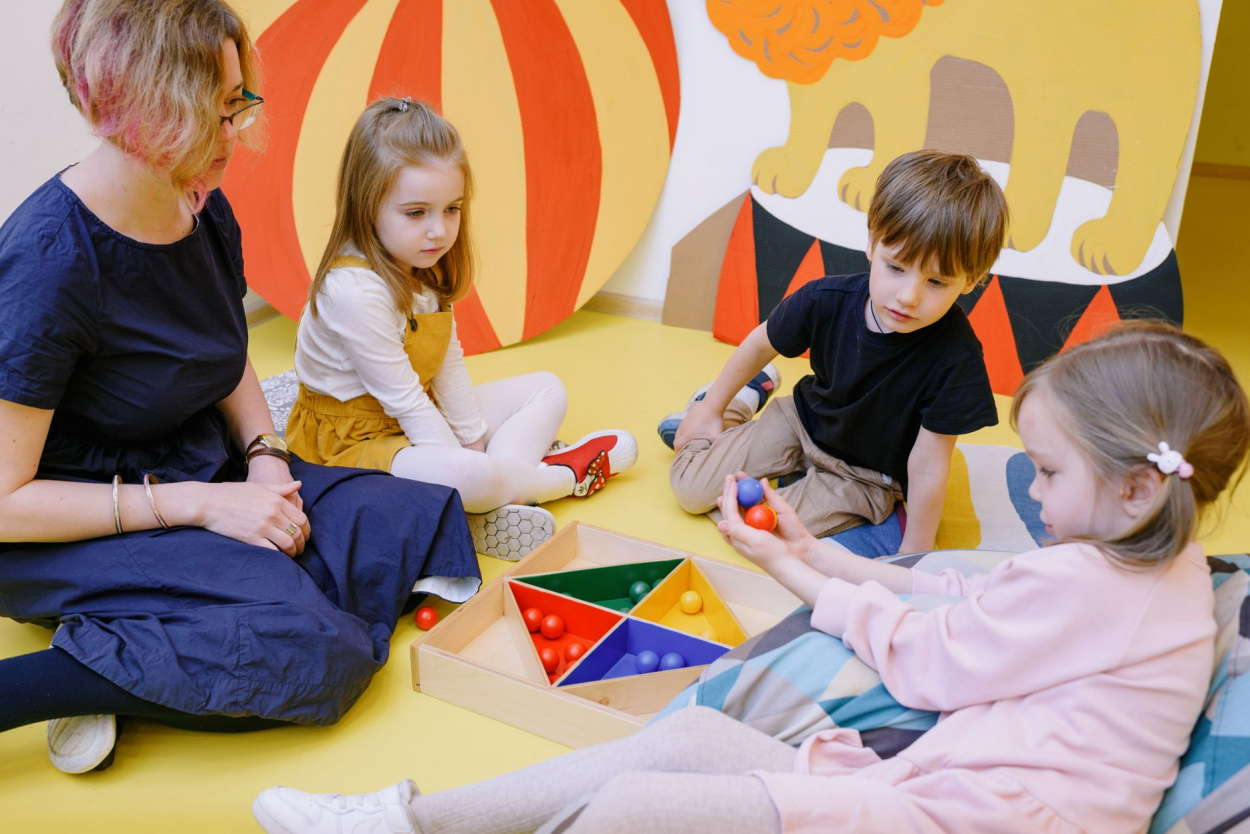
In Montessori education, practical life is often where confidence begins. Before a child writes long words, solves complex problems, or joins group projects with ease, they first learn to trust their own hands, movements, and decisions. In our experience, practical life activities give preschoolers exactly that foundation. When children pour water, button a frame, wipe a table, prepare a snack, or return materials to their proper place, they are not “just helping” or “just playing”. They are building independence through purposeful work.
At Montessori Children's House, we see practical life as much more than a classroom area. It is part of how children develop self-respect, care for others, concentration, and a sense of belonging within the learning community. These experiences fit naturally within an authentic Montessori environment and also reflect the goals of Te Whāriki, which emphasises empowerment, belonging, contribution, and growing as a confident learner.
Practical life activities are real, purposeful tasks adapted to a child’s size and stage of development. In a Montessori setting, these usually include caring for self, caring for the environment, grace and courtesy, and movement control. The aim is not to keep children busy. The aim is to help them master the everyday actions that allow them to participate more fully in life.
Typical examples include washing hands, hanging up a bag, pouring from one jug to another, sweeping, polishing, folding cloths, opening and closing containers, preparing food, watering plants, and learning how to greet others respectfully. These activities are carefully presented so children can repeat them independently and experience success through their own effort.
If you would like to understand more about how this sits within our learning philosophy, our About page and overview of Our Place give a clearer picture of the environment that supports this kind of development.
Confidence in early childhood usually grows from competence. We often see adults try to build confidence through praise alone, but lasting confidence tends to come when a child can genuinely say, “I did it myself.” Practical life activities create repeated opportunities for that feeling.
When a child successfully carries a tray without spilling, fastens a zipper, or prepares their own snack, they receive immediate, meaningful feedback. The result is visible. The work matters. The child can see their own progress. Over time, this builds self-trust.
In our classrooms, confidence often emerges quietly. A child who once waited for help may begin choosing work independently. Another who hesitated to join group routines may start setting the table for others. A child who struggled with transitions may become more secure once they know how to complete familiar tasks for themselves. These are small moments on the surface, but developmentally they are significant because they help children experience themselves as capable and valued.
Te Whāriki places empowerment at the centre of early childhood curriculum and describes a vision for children to grow as competent and confident learners and communicators. It also links belonging with the confidence to try new experiences, which closely reflects what we see when children gain mastery through practical life work.
Independence in preschool does not mean doing everything alone. It means gradually developing the skills, judgement, and confidence to participate with less adult intervention. Practical life supports that process in several ways.
Children become independent when tasks are achievable. In Montessori environments, we present one process at a time and make each step clear. A child might first learn to carry a chair carefully, then roll a mat, then pour water, then wash a table. This sequence helps them build capability in realistic stages.
Many practical life activities refine hand-eye coordination, balance, grip strength, order, and movement control. These are not only daily living skills; they also support later learning, including writing, concentration, and self-regulation.
When the environment is prepared well, children do not need to ask an adult to do every small thing for them. They learn where materials belong, how to access them, and how to complete routines. This creates a healthy form of independence grounded in responsibility rather than isolation.
We regularly see children become more settled when they know how to contribute. Carrying their own lunch items, watering a plant, helping reset a workspace, or welcoming another child all reinforce that they are part of something larger than themselves. That sense of contribution matters deeply.
| Practical life activity | What the child is practising | How it supports confidence and independence |
|---|---|---|
| Pouring water | Hand control, concentration, sequencing | Children learn they can manage a real task carefully by themselves |
| Buttoning or zipping | Fine motor control, patience, persistence | Children rely less on adults for dressing and self-care |
| Washing a table | Order, movement, responsibility | Children see that their work has a visible and useful outcome |
| Preparing food | Coordination, safety awareness, independence | Children gain practical competence in meeting their own needs |
| Sweeping or tidying | Care of environment, attention to detail | Children feel they can contribute meaningfully to the group |
| Greeting others and waiting a turn | Grace and courtesy, self-regulation, social awareness | Children become more confident in social participation |
| Watering plants or caring for materials | Consistency, observation, empathy | Children develop responsibility and pride in trusted roles |
As an early childhood setting in Aotearoa New Zealand, we value the strong connections between Montessori practice and Te Whāriki. Practical life activities support several key principles and strands in clear, everyday ways.
Whakamana | Empowerment: Children are trusted with real tasks, real tools, and genuine responsibility. This communicates that they are capable learners whose efforts matter.
Mana Whenua | Belonging: As children learn routines, care for shared spaces, and take part in the life of the classroom, they develop security and connection. Te Whāriki explicitly links belonging with confidence to try new experiences.
Mana Tangata | Contribution: Practical life helps children recognise that they can help, participate, and make a valued contribution to the group.
Ngā Hononga | Relationships: Many practical life lessons involve observing others, taking turns, offering help appropriately, and respecting shared spaces. These are relational skills, not only practical ones.
For families, this means practical life should not be seen as separate from the wider curriculum. It is one of the most concrete ways children experience empowerment, contribution, and community in daily preschool life.
In our experience, practical life has some of the strongest effects on children who are still learning how to settle, persist, or trust their own ability. We often see that a child who resists group instruction may engage deeply with a purposeful one-to-one practical life presentation. Once they feel successful there, their confidence often carries into other areas of learning.
We also see that repetition matters. Adults can be tempted to interrupt when a child wants to repeat the same pouring, spooning, or polishing activity again and again. But this repetition is often where concentration, coordination, and emotional steadiness develop. The visible task may stay the same while the child’s internal growth is moving quickly.
Another common observation is that independence grows best when adults slow down. When we do too much for children, we can unintentionally send the message that we do not believe they are capable yet. When we prepare the environment thoughtfully, demonstrate clearly, and allow time for effort, children often achieve much more than adults expect.
Families do not need to recreate a full Montessori classroom to support practical life. What matters most is giving children real opportunities to participate in everyday routines.
Small daily responsibilities often do more for independence than occasional “special” activities. The goal is not speed. The goal is capability.
If you are evaluating an early childhood programme, we suggest looking beyond whether children appear busy or entertained. Ask whether the environment genuinely supports independence. Are children trusted with meaningful tasks? Can they access materials themselves? Are they encouraged to care for themselves, others, and the space around them? Do routines help them become more capable over time?
In an authentic Montessori setting, practical life is not an extra. It is foundational. It helps children build concentration, coordination, self-respect, community awareness, and confidence rooted in real achievement. Those qualities support school readiness, but more importantly, they support life readiness.
If you would like to learn more about our approach or discuss whether our environment may be the right fit for your child, you are welcome to contact us.
This article was produced by our internal early childhood education team at Montessori Children's House. Our editorial approach is grounded in day-to-day experience supporting preschool children in an authentic Montessori environment, alongside ongoing engagement with Te Whāriki and the practical realities of early learning in Aotearoa New Zealand. We write from the perspective of practitioners who observe how children develop through prepared environments, respectful guidance, and purposeful hands-on work.