
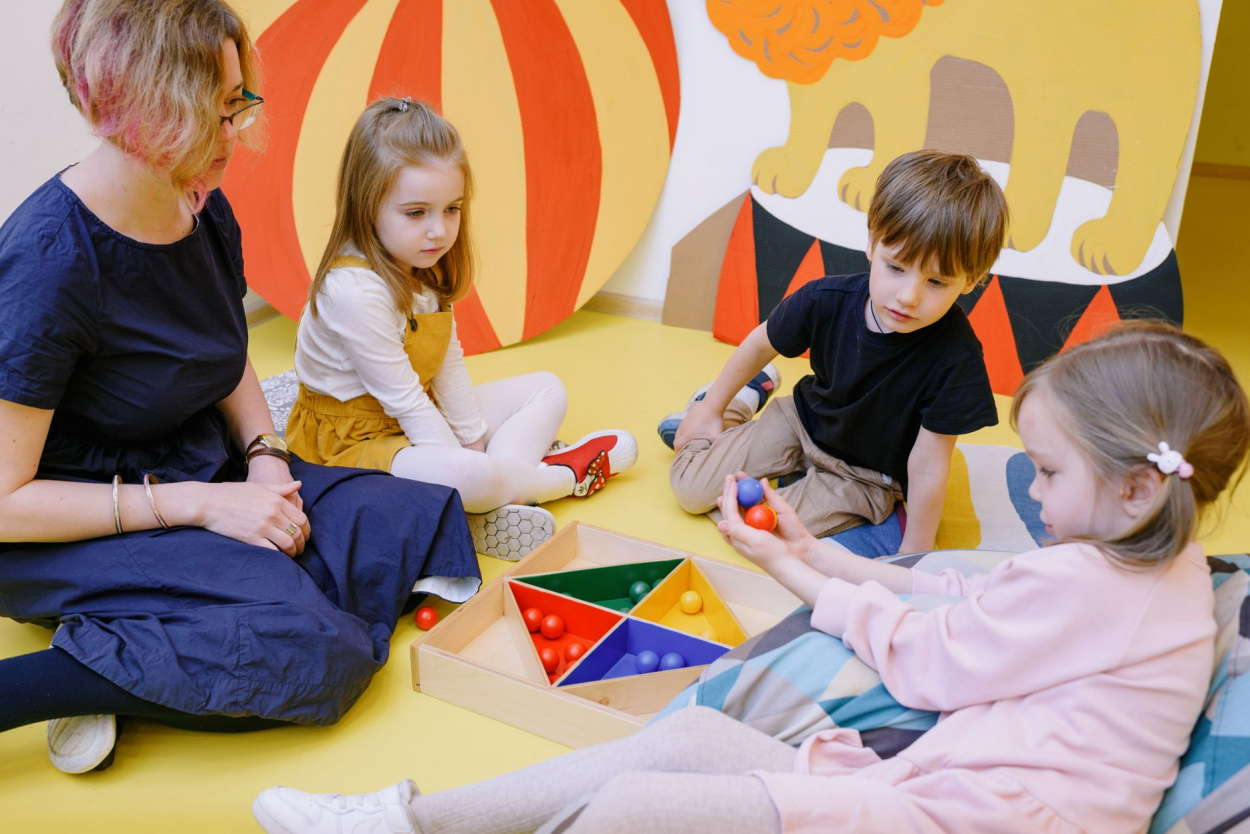
For toddlers, some of the most important learning does not happen during a formal lesson. It happens while putting on shoes, washing hands, carrying a plate to the table, wiping a spill, greeting a friend, or helping pack away after lunch. In our experience as a Montessori early childhood team, these ordinary moments are where young children build the foundations for independence, confidence, movement, language, and social belonging.
At Montessori Children’s House, we view routines as meaningful work rather than tasks to rush through. Toddlers are not simply being kept busy while adults manage the day. They are learning how to participate in life. That is a central part of authentic Montessori education, and it also fits naturally with the woven, holistic view of learning reflected in Aotearoa New Zealand early childhood practice.
Montessori for toddlers is grounded in the idea that young children want to do things for themselves. We regularly see that when the environment is calm, predictable, and prepared for success, toddlers are far more capable than adults often expect. A routine like hanging up a bag or washing a small table may look simple from the outside, but it asks the child to sequence steps, coordinate movement, focus attention, and persist until the task is complete.
That is why routine matters so much. Repeated daily experiences help toddlers make sense of time, understand expectations, and develop trust in their environment. Instead of relying on constant adult correction, they begin to know what comes next and how to contribute.
In Montessori settings, these experiences are often described as practical life. This includes care of self, care of the environment, food preparation, and grace and courtesy. For toddlers, these areas are not extras. They are core learning pathways.
One of the clearest outcomes of Montessori routines is growing independence. When toddlers practise taking off shoes, putting arms into sleeves, washing hands, or carrying their own cup, they learn that they are capable participants in their own day.
We often see that independence is not just about skill. It also changes a child’s sense of self. A toddler who can complete a small routine with limited help usually becomes more settled, more willing to try, and more cooperative in other parts of the day. Success in one area often transfers into confidence elsewhere.
That is one reason our team pays close attention to the setup of the environment. Low hooks, accessible shelves, child-sized tools, and consistent routines all make independence more realistic. You can learn more about how environment shapes learning in our place.
Toddlers learn through movement, and routines give that movement purpose. Pouring water, carrying a tray, spooning food, pushing in a chair, climbing onto a changing step, or rolling up sleeves all strengthen coordination and body awareness.
In our experience, purposeful movement is far more valuable than expecting toddlers to sit still for long periods. Everyday actions help refine balance, hand-eye coordination, grip strength, and control. These are important foundations for later writing, self-care, and practical problem-solving.
When a toddler repeats a familiar routine, we often see long periods of focused attention emerge quite naturally. A child may practise opening and closing a lunch container several times, carefully wipe the same patch of water, or return to handwashing with visible satisfaction.
Adults sometimes underestimate how much repetition matters at this age. From a Montessori perspective, repetition is not wasted time. It is how toddlers consolidate learning. Through routine, they experience the cycle of beginning, doing, and finishing. Over time, this builds concentration and perseverance.
Routines create some of the best opportunities for real, grounded language. Instead of abstract vocabulary, toddlers hear and use words connected to what they are doing right now: sleeve, button, pour, wipe, carry, open, close, wait, turn, finished.
We find that language grows especially well when adults slow down, name actions clearly, and speak respectfully during caregiving and transitions. Mealtime, nappy changing, toileting, dressing, and tidying all become rich spaces for conversation, comprehension, and expressive language.
In a New Zealand setting, everyday routines also create natural places for te reo Māori words, phrases, songs, and culturally responsive ways of being together to become part of the child’s lived experience rather than something separate from the day.
Toddlers thrive on knowing what to expect. Consistent routines help them feel secure because the day becomes more understandable. When children know where belongings go, what happens before lunch, or how transitions are handled, they are less reliant on constant adult direction.
We typically see fewer struggles when routines are predictable and unhurried. This does not mean every day is rigid. It means there is enough consistency for the child to orient themselves, with enough flexibility for individual needs. That balance is especially important for toddlers, who are still learning how to manage strong feelings, waiting, and change.
Everyday routines are also where toddlers begin learning how to live with others. Waiting for a turn at the sink, offering a cloth after a spill, carrying a plate carefully around someone else, greeting others, or helping tidy a shared space all contribute to social development.
In Montessori, we often speak about grace and courtesy in practical, age-appropriate ways. For toddlers, that may look like gentle hands, simple greetings, sitting for a shared meal, or learning how to ask for help. These are early forms of empathy, cooperation, and respect.
One of the most powerful shifts we see is when toddlers realise they are not just being looked after. They can contribute. Helping set the table, putting work away, watering a plant, or carrying washing to a basket gives a young child a real sense of belonging.
Meaningful contribution matters. It tells the toddler, in a concrete way, that they are part of a community. That message supports both self-esteem and responsibility.
| Everyday routine | What the toddler is practising | Why it matters |
|---|---|---|
| Dressing and undressing | Coordination, sequencing, independence, body awareness | Builds self-help skills and confidence |
| Handwashing | Order, concentration, hygiene habits, following steps | Supports self-care and consistent routine |
| Snack or meal preparation | Fine motor control, practical problem-solving, language, responsibility | Connects movement and purposeful work |
| Tidying up | Classification, memory, care of environment, completion of tasks | Helps children understand order and contribution |
| Cleaning spills | Cause and effect, coordination, persistence, responsibility | Normalises mistakes and teaches recovery |
| Greeting and farewelling | Social confidence, belonging, communication, courtesy | Strengthens relationships and community habits |
| Toileting or nappy routines | Communication, bodily awareness, trust, cooperation | Supports dignity, self-knowledge, and partnership with adults |
| Rest and transition times | Emotional regulation, predictability, listening, patience | Helps toddlers manage the rhythm of the day |
Routines only become true learning opportunities when the environment is prepared well. In our work with toddlers, that means designing spaces where children can act with growing independence instead of waiting for an adult to do everything for them.
We usually focus on a few essentials:
This is one reason authentic Montessori environments look different from settings built mainly around entertainment or adult convenience. The aim is not to fill the day with activities. The aim is to help children participate in daily life with increasing competence.
Parents are sometimes surprised by how often toddlers want to repeat the same task. From our perspective, that repetition is a sign of developmental work taking place. The child is building mastery.
We also find that transitions deserve special attention. Moving from outdoor play to lunch, from work time to nappy changing, or from arrival to separation can be the hardest moments in a toddler’s day. Clear routines, advance cues, and unhurried support make these transitions smoother. When adults move calmly and consistently, toddlers are more likely to stay regulated and engaged.
Community discussions among Montessori educators and parents often echo this same point: the challenge is rarely the routine itself, but the pace around it. When adults feel rushed, toddlers usually feel it too. In practice, a slower, more intentional rhythm often leads to more cooperation than repeated prompting does.
Our approach to toddler routines sits comfortably alongside Te Whāriki because the curriculum recognises learning as holistic and woven through everyday experiences. In early learning, children do not only learn during planned activities. They learn through caregiving, relationships, movement, language, group participation, and the rhythm of the day.
That alignment is important in our setting. We see Montessori routines as a practical way to support children to become confident, capable learners who develop a sense of belonging and contribution. Everyday experiences also provide natural opportunities to honour relationships, respect each child’s culture, and reflect the partnership values that underpin early childhood education in Aotearoa New Zealand.
If you would like to understand more about our philosophy and setting, you can visit about us or contact us to speak with our team.
If you want to support Montessori-style learning through routines at home, we usually recommend starting small. You do not need to redesign the whole house. One or two consistent routines done well can make a meaningful difference.
In our experience, toddlers respond best when adults combine high respect with realistic expectations. The goal is not perfection. The goal is participation.
This article was produced by our internal early childhood education team at Montessori Children’s House. Our editorial process draws on our day-to-day experience supporting toddlers in an authentic Montessori environment in Miramar, Wellington, together with curriculum-based review of recognised early childhood guidance relevant to Aotearoa New Zealand. We write from a practitioner perspective, focusing on how Montessori principles work in real settings, what families commonly ask us, and what we consistently observe in children’s learning through everyday routines.