
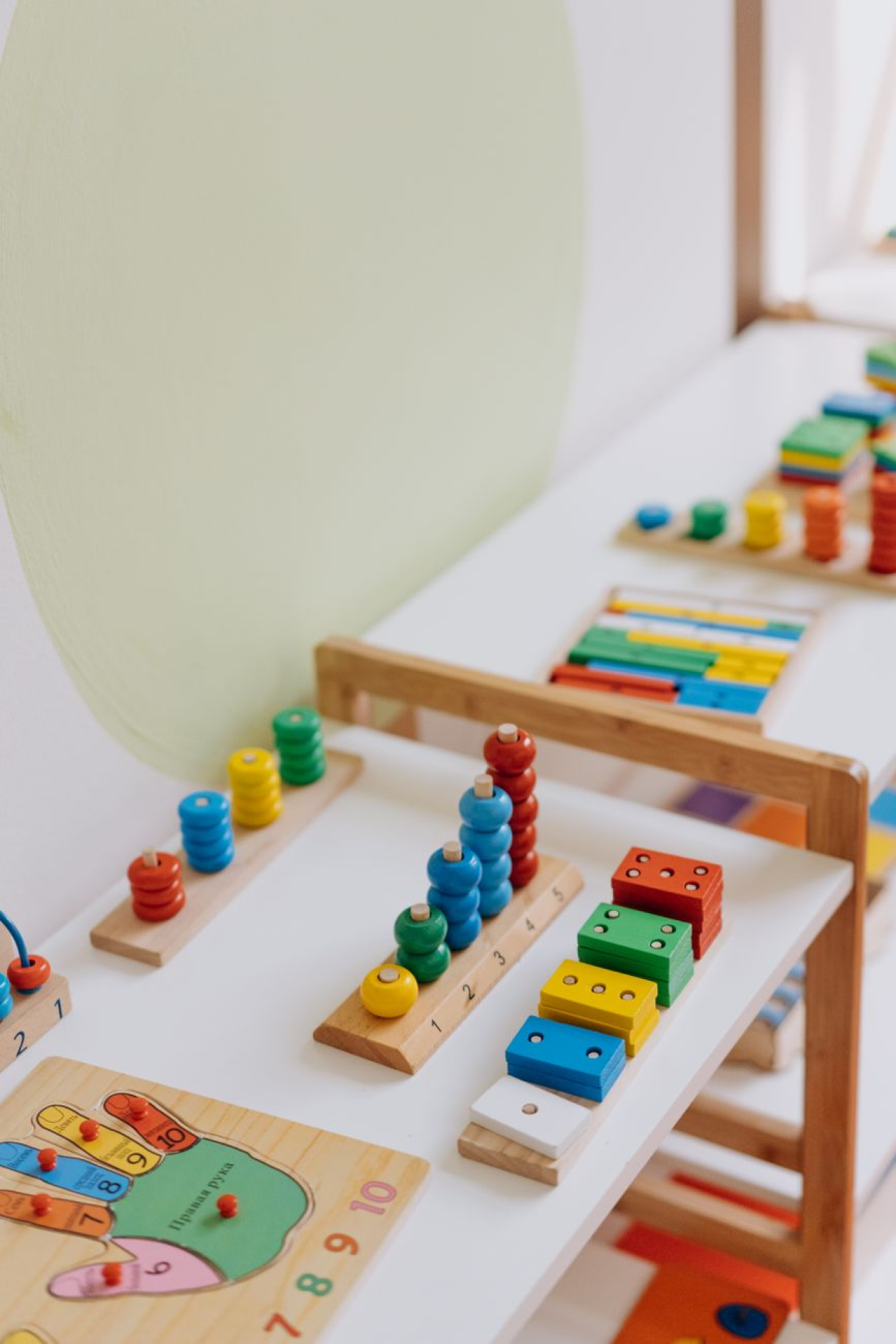
In Montessori education, the prepared environment is not just the backdrop to learning. It is one of the core teaching tools. In our experience, the environment helps children understand what to do, where to find it, how to return it, and how to participate confidently in a shared community. When a classroom is thoughtfully prepared, children can act with greater independence, build concentration, and develop a stronger sense of responsibility.
At an authentic Montessori preschool, the environment is carefully arranged for the child rather than for adult convenience. That means child-sized furniture, accessible materials, clear routines, order, beauty, and purposeful spaces for movement and work. It also means adults pay close attention to what supports development and what creates unnecessary interruption.
For families exploring our approach, this is one reason Montessori classrooms feel different from many other early childhood settings. You can learn more about our approach on our Montessori page and see how environment matters in practice through Our Place.
A prepared environment is a learning space intentionally designed to match children’s developmental needs. In Montessori practice, this includes the physical layout, the learning materials, the routines of the day, the expectations for care of the space, and the role of the adult. We do not think of the environment as decoration. We think of it as a structure that allows children to engage meaningfully and independently.
In practical terms, a prepared environment usually includes low shelves, logically sequenced materials, uncluttered spaces, real tools scaled for children, and distinct areas for practical life, sensorial exploration, language, mathematics, and cultural learning. Each part of the room has a purpose. Each material has a place. That consistency helps children know what is available to them and how to use the environment respectfully.
We also see the prepared environment as social and emotional, not only physical. The tone of the room matters. Calm transitions, predictable routines, and respectful interactions all contribute to an environment where children feel safe enough to explore, persist, and try again.
One of the strongest benefits of the prepared environment is that it reduces unnecessary dependence on adults. When children can reach the materials they need, carry out familiar routines, and return items independently, they experience themselves as capable. That matters for confidence, but it also matters for learning. A child who can begin purposeful work without waiting for constant direction has more opportunities to practise judgment, coordination, self-regulation, and concentration.
We often see that order in the environment supports order in thinking. Children are better able to focus when the room is not visually noisy, when materials are complete and inviting, and when there is enough consistency for them to predict what comes next. This does not mean the classroom is rigid. It means it is thoughtfully structured so children can use their energy for exploration rather than confusion.
The prepared environment also encourages care for others. Because the classroom is shared, children learn that their choices affect the community. Returning work properly, waiting for a turn, moving carefully, and maintaining the space are all part of social learning. In our view, these everyday habits are foundational to respectful citizenship in a classroom community.
Furniture, shelves, tools, and resources should be proportioned for children. Accessibility is essential because independence depends on children being able to act without unnecessary adult intervention.
Materials are arranged consistently and purposefully. Children can see what is available, choose intentionally, and return items to their proper place. This visible order helps orient the child and supports concentration.
Montessori materials are selected because they isolate concepts, invite repetition, and support self-correction. In our experience, fewer well-chosen materials are more effective than overcrowded shelves.
A calm, welcoming environment communicates respect. Natural light, attractive displays, real objects, and well-maintained materials all signal that the child and the work of childhood are valued.
Children need genuine choice, but choice works best within clear boundaries. In a prepared environment, children are free to select appropriate work, move carefully, and repeat activities, while also respecting other people, materials, and routines.
In Montessori early childhood settings, mixed ages create opportunities for observation, modelling, leadership, and patience. The environment supports this by allowing different levels of work to coexist in an organised way.
The adult prepares, observes, guides, and protects the learning conditions. We see this as one of the most important parts of authenticity. The room may look calm and natural, but it only functions well when adults are intentional about what they present, when they step in, and when they hold back.
| Feature of the environment | What children experience | Why it matters |
|---|---|---|
| Low, open shelving | Children can choose and access materials independently | Builds autonomy and decision-making |
| Consistent order | Children know where things belong | Supports concentration and responsibility |
| Child-sized tools and furniture | Children can participate in real tasks successfully | Strengthens coordination and confidence |
| Purposeful Montessori materials | Children repeat and refine specific skills | Promotes deep learning through hands-on experience |
| Calm, beautiful spaces | Children feel settled and respected | Encourages engagement and emotional security |
| Freedom within limits | Children make choices within clear expectations | Develops self-regulation and social awareness |
| Shared care of the classroom | Children contribute to the community | Fosters belonging and mutual respect |
In Aotearoa New Zealand, Montessori practice sits within the wider early childhood curriculum context of Te Whāriki. We see strong alignment here. A carefully prepared Montessori environment supports empowerment by enabling children to act capably and make meaningful choices. It supports holistic development because children learn through movement, language, practical activity, relationships, and sensory exploration rather than through isolated academic drills. It also supports responsive relationships because the adult observes closely and prepares the environment in relation to the child, the whānau, and the local setting.
Te Whāriki also places strong emphasis on belonging, contribution, communication, and exploration. In our experience, the prepared environment helps make these strands visible in everyday classroom life. Belonging grows when children recognise the room as a place they know how to navigate and care for. Contribution grows when children participate in maintaining the environment and helping others. Communication develops through rich language, shared routines, and meaningful social interaction. Exploration deepens when materials are accessible, purposeful, and open to repetition.
Because our setting is grounded in Montessori principles and informed by Te Whāriki and the Treaty of Waitangi, we also recognise that environment is cultural as well as physical. A prepared environment should reflect the identity, language, relationships, and place-based context of the children and families in it. Families interested in our philosophy can read more about us and how we approach early childhood education in practice.
Tidiness can be part of it, but the idea is much deeper. A prepared environment is designed to support developmental needs, independence, and meaningful work. A neat room without purpose is not enough.
We usually find the opposite. Clear order reduces friction and helps children use their energy creatively and constructively. When children know how to access and manage the environment, they can engage more deeply in exploration and problem-solving.
The Montessori adult is not passive. Preparation, observation, and timely guidance require skill and intention. Much of the teaching happens through what the adult notices and how the environment is adjusted.
Some features overlap, but an authentic prepared environment is tied to Montessori principles, specific developmental materials, and a consistent approach to freedom, responsibility, and observation.
When families visit a Montessori classroom, we suggest looking beyond appearance. Ask whether children can independently access materials. Notice whether the room feels calm without being overly controlled. Look for purposeful materials rather than general clutter. Observe whether children are trusted with real responsibility. Pay attention to whether adults are respectfully guiding rather than directing every step.
These details often tell you more about authenticity than labels do. If you would like to ask questions about how we prepare our learning spaces or how our programme works day to day, you are welcome to contact us.
This article was produced by our internal early childhood education team at Montessori Children’s House. We draw on our day-to-day experience in Montessori preschool practice, our understanding of authentic Montessori environments for young children, and our work within the Aotearoa New Zealand early learning context shaped by Te Whāriki and the Treaty of Waitangi. Our editorial process focuses on practical accuracy, alignment with recognised early childhood principles, and clear guidance that helps families make informed decisions.