
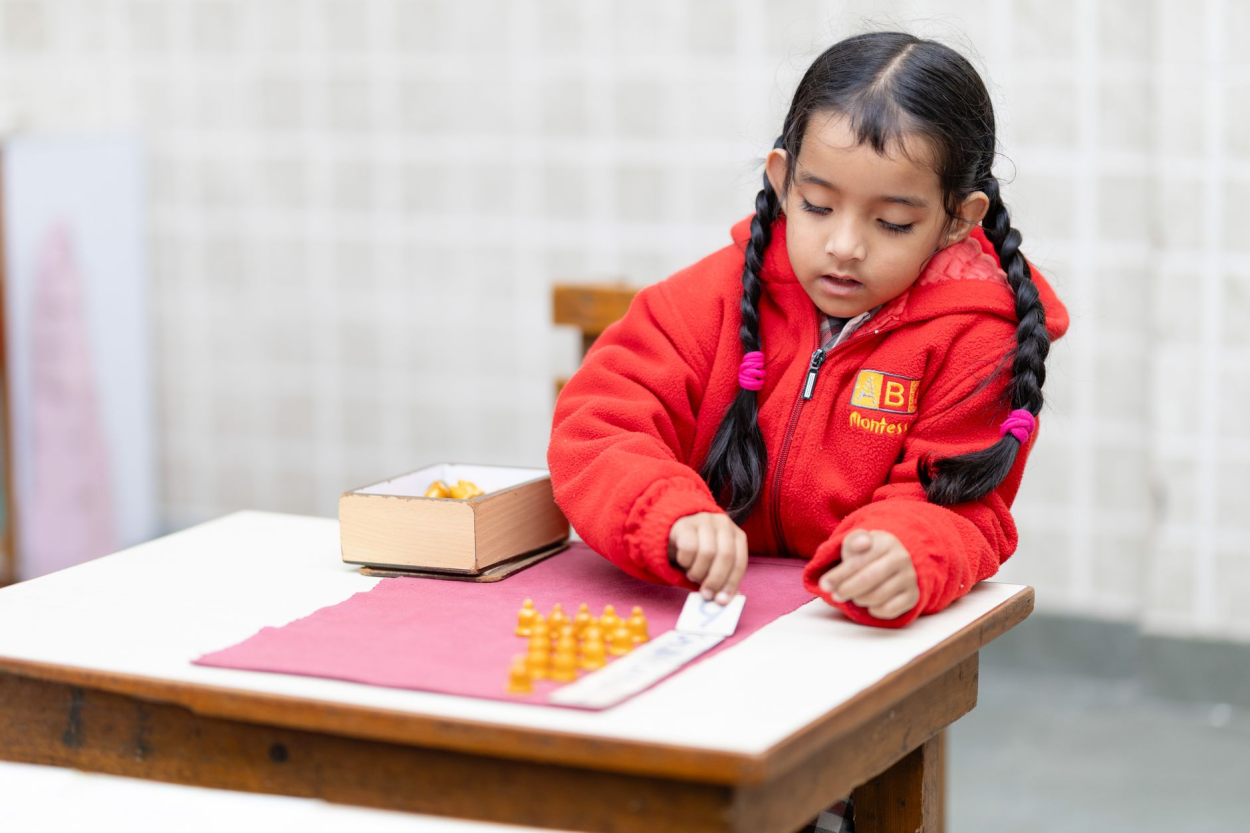
When families first explore Montessori, one of the biggest questions we hear is simple: what makes Montessori truly authentic? In practice, authentic Montessori education is not defined by furniture, branding, or a few wooden materials on a shelf. It is a complete approach to early childhood education based on close observation of children, respect for their development, and a carefully prepared learning environment that supports independence, concentration, and social responsibility.
At Montessori Children’s House, we see authentic Montessori as a living educational practice. It shapes how we prepare the environment, how we guide children, how we partner with whānau, and how we support the whole child. In Aotearoa New Zealand, this work also sits meaningfully alongside our Montessori approach, Te Whāriki, and our commitment to bicultural practice grounded in Te Tiriti o Waitangi.
For families, understanding authenticity matters because the word “Montessori” is widely used, but not all Montessori-labelled programmes follow the core features of the method with consistency. Looking beyond the label helps parents choose an environment that genuinely supports early childhood development.
Authentic Montessori education begins with a clear view of the child as capable, active, and naturally driven to learn. Rather than relying on constant adult direction, rewards, or one-size-fits-all instruction, we prepare conditions that allow children to develop through purposeful activity, repetition, movement, choice, and meaningful responsibility.
In our experience, authenticity rests on the relationship between several elements working together: a trained Montessori teacher, a prepared environment, mixed-age community, sequential hands-on materials, uninterrupted work periods, and deep respect for each child’s pace of development. If one or two of these pieces are missing, the setting may borrow Montessori ideas, but it is less likely to offer a fully authentic Montessori experience.
We also think authenticity is visible in the atmosphere of the classroom. An authentic Montessori environment usually feels calm, ordered, purposeful, and child-centred. Children are not passive recipients of lessons. They are active participants in their own learning, supported by adults who observe carefully and step in with precision rather than unnecessary interruption.
| Feature | What it looks like | Why it matters for development |
|---|---|---|
| Prepared environment | Ordered, beautiful, accessible spaces with purposeful materials arranged for independent use | Supports concentration, confidence, decision-making, and self-care |
| Trained Montessori adults | Teachers who observe closely, present materials carefully, and guide rather than dominate | Helps children receive the right support at the right time |
| Mixed-age grouping | Children learn alongside younger and older peers in a community setting | Builds empathy, leadership, patience, and social learning |
| Hands-on Montessori materials | Concrete materials used in a developmental sequence | Strengthens coordination, sensory learning, language, maths readiness, and problem-solving |
| Child-directed work | Children choose purposeful activities within clear limits | Encourages intrinsic motivation and sustained engagement |
| Uninterrupted work cycle | Long periods for deep work without constant transitions | Develops focus, persistence, and satisfaction in mastering skills |
We often explain to families that Montessori freedom is not the same as a free-for-all. Authentic Montessori offers freedom within a carefully structured environment. Children are free to choose meaningful work, but the environment, expectations, and adult guidance are intentionally designed to support both individual development and the wellbeing of the group.
Another important distinction is the adult role. In a conventional model, the adult may be the centre of the room, directing the same activity for everyone at once. In an authentic Montessori setting, we prepare, observe, invite, model, and connect the child with the environment. That shift in adult posture is one of the strongest signs of fidelity to Montessori principles.
One of the most visible outcomes of authentic Montessori is growing independence. Children learn to carry materials, tidy their workspace, care for belongings, pour water, serve food, wash hands, dress themselves, and complete tasks in sequence. These daily actions may seem small, but in our experience they are foundational. They help children develop confidence, self-trust, and the belief that “I can do it myself.”
Independence in Montessori is not only practical. It also supports emotional development. As children gain real competence, they often become more settled, more willing to try, and more resilient when facing challenge.
We regularly see that young children are capable of much deeper concentration than adults sometimes expect. In an authentic Montessori environment, concentration is protected through order, purposeful activity, and uninterrupted work time. Rather than moving children rapidly from one task to another, we allow time for repetition and absorption.
This matters because sustained attention is closely tied to self-regulation, persistence, and later learning habits. When children can return to an activity, repeat it, and experience mastery, they are developing internal discipline rather than relying only on external control.
Montessori is deeply hands-on. Children learn through movement, touch, manipulation, and purposeful use of real objects. In our experience, this is especially powerful in the early years, when physical development and cognitive development are tightly linked. Carrying trays, rolling mats, spooning, polishing, sorting, building, tracing, and working with sensorial materials all contribute to coordination, order, and body awareness.
These experiences also help prepare the child for later abstract learning. Before a concept becomes symbolic, it is often understood first through the hands and senses.
Authentic Montessori environments are rich in conversation, vocabulary, classification, storytelling, songs, books, grace and courtesy, and precise naming of the world. We do not see language development as separate from the rest of the curriculum. It grows through practical life, sensorial exploration, cultural activities, and social interaction.
Because children are engaging with real materials and real experiences, language is grounded in meaning. This often leads to stronger comprehension, richer expression, and genuine curiosity about words, sounds, stories, and communication.
Some families are surprised to learn how social Montessori is. Although children often work independently, they are part of a shared community. Mixed-age groupings allow younger children to observe older peers, while older children practise leadership, patience, and care. Daily routines such as waiting, turn-taking, helping, preparing food, greeting others, and restoring order after work all contribute to social development.
In our experience, social learning in Montessori is strongest when it is embedded in real community life rather than taught only as a separate lesson. Children learn that their choices affect others, and that freedom comes with responsibility.
Authentic Montessori is designed to protect the child’s natural drive to learn. Instead of depending heavily on prizes, stickers, or constant praise, we aim to help children experience the satisfaction of effort, discovery, and mastery. Over time, this can support persistence and a healthier relationship with learning itself.
We typically see that when children are trusted with meaningful work and given time to engage deeply, they begin to take pride in progress that comes from within. That internal motivation is one of the most valuable outcomes of an authentic Montessori education.
In Aotearoa New Zealand, early childhood education is guided by Te Whāriki, a national curriculum framework that weaves together children’s learning, development, identity, belonging, communication, contribution, wellbeing, and exploration. In our setting, authentic Montessori practice and Te Whāriki are not at odds. They can work together in a thoughtful and locally grounded way.
We see strong alignment between Montessori and Te Whāriki in several areas: respect for the whole child, the importance of relationships, the role of environment, the value of child-led engagement, and the recognition that learning is interconnected rather than fragmented. Montessori offers a clear developmental method and prepared environment, while Te Whāriki provides a distinctly New Zealand bicultural framework that honours identity, language, culture, whānau, and place.
This matters in practice. Authentic Montessori in Aotearoa should not feel detached from local context. It should be responsive to the child, the family, the community, and the obligations of education in New Zealand. Families interested in our setting can learn more about our environment and our approach and values.
If you are comparing early childhood options, we recommend looking beyond marketing language and asking practical questions about how the programme operates day to day.
We also encourage families to observe how children move in the space. Are they active, settled, purposeful, and respected? Do they appear rushed and managed, or engaged and trusted? Often, the feel of the environment tells you as much as the written philosophy.
If we had to summarise authentic Montessori simply, we would say this: it is a developmentally grounded way of educating young children that combines freedom, structure, responsibility, and respect. Its value for early childhood development lies not in one isolated technique, but in the consistency of the whole approach.
If you would like to see how this looks in a real early childhood setting, we invite you to explore Montessori at our centre or contact us to learn more.
This article was produced by our internal editorial and teaching team at Montessori Children’s House. Our content is shaped by day-to-day experience in early childhood education, practical understanding of Montessori environments, and ongoing review of recognised educational guidance relevant to Aotearoa New Zealand. We write from the perspective of practitioners who work closely with children, families, learning environments, and the realities of authentic Montessori implementation.