For many parents, the word “Montessori” comes up early in the preschool search, but the meaning is not always clear until you see it in practice. We often meet Wellington families who are comparing different early childhood options and trying to work out whether Montessori is simply a style of classroom, a philosophy, or a full approach to child development.
In our experience, Montessori preschool is best understood as a carefully prepared learning environment where children build independence, concentration, coordination, confidence, and respect for others through purposeful activity. Rather than moving every child through the same task at the same time, we support each child to engage with work that matches their stage of development, interests, and readiness.
For families exploring authentic Montessori education in Wellington, it also helps to know that Montessori in Aotearoa New Zealand sits within the wider early childhood context of Te Whāriki, New Zealand’s national early childhood curriculum. Te Whāriki describes early childhood curriculum as a woven framework of principles, strands, goals, and learning outcomes, with a strong focus on the mana of the child, relationships, belonging, and local curriculum. That broad framework fits well with a thoughtful Montessori setting when it is implemented with care and integrity.
Montessori preschool is an early childhood approach based on the educational principles developed by Dr. Maria Montessori. At its heart, it views children as capable, active learners who benefit from freedom within clear limits, hands-on materials, mixed-age community, and a calm, orderly environment.
In a genuine Montessori preschool, we do not treat learning as something delivered only through group instruction. Instead, we prepare the environment so children can learn by doing. They choose from purposeful activities, repeat them until they gain mastery, and develop self-discipline over time. Our role as adults is to observe closely, introduce materials carefully, protect concentration, and guide social development.
If you would like a clearer overview of the philosophy itself, families can also explore our Montessori page.
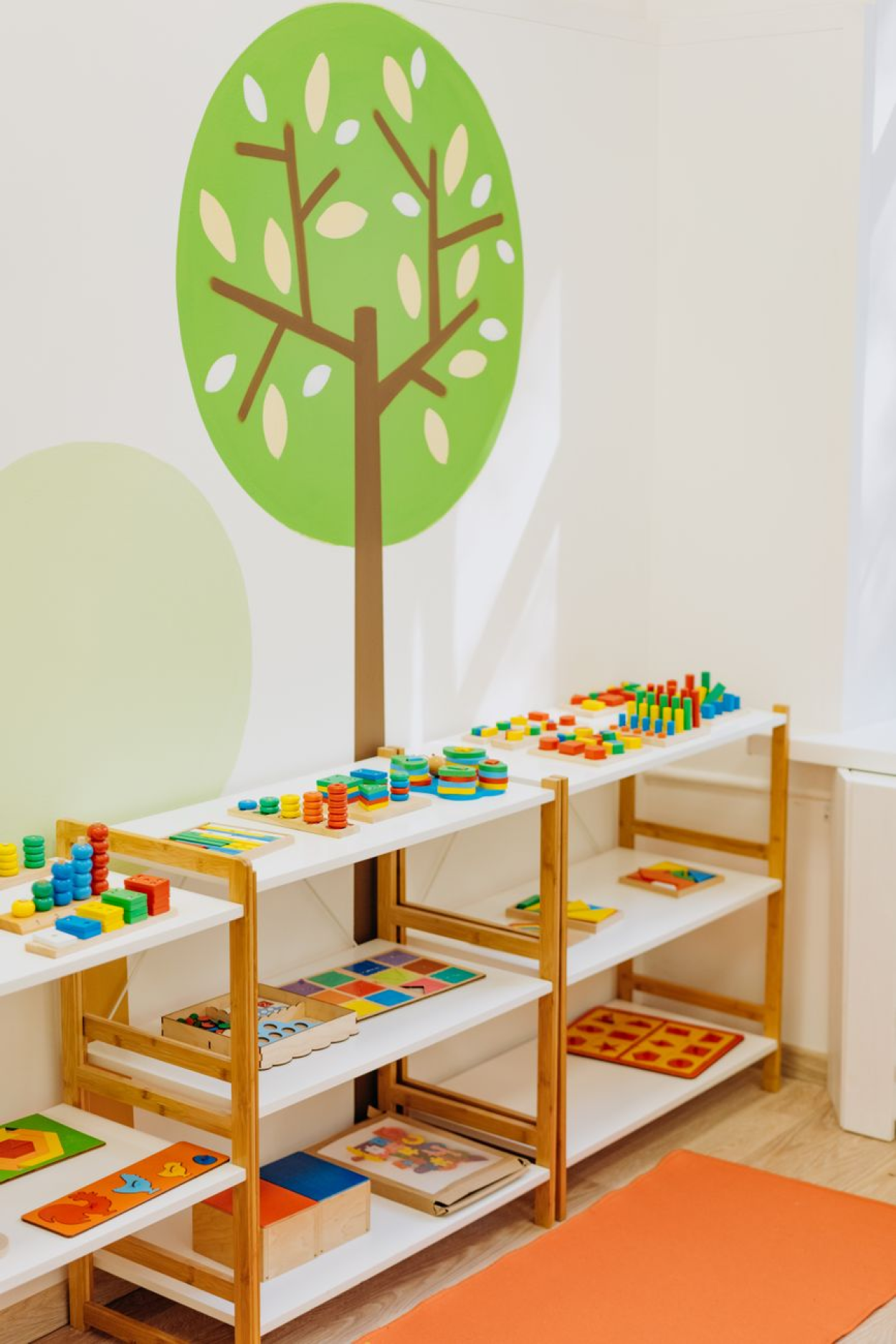
When parents first walk into a Montessori environment, they often notice that it feels different from a conventional preschool room. In our experience, the difference is not about appearance alone. It comes from how the room is prepared and how children use it every day.
Common features include:
Parents who want to picture the physical environment more concretely may find our Our Place page helpful.
There is overlap between many high-quality early childhood settings: play, relationships, language development, social learning, and wellbeing all matter. The main difference is usually in how learning is organised and how independence is built.
| Area | Montessori preschool | Conventional preschool |
|---|---|---|
| Learning structure | Children often choose purposeful work independently within a prepared environment | Children may move more frequently between teacher-led and free-play activities |
| Role of the teacher | Guide, observer, and careful presenter of materials | Often more group-directive or activity-directive |
| Classroom setup | Orderly shelves, sequenced materials, child-accessible spaces | May be organised more around play zones, themes, or rotating activities |
| Use of time | Long uninterrupted work cycles are important | Day may be more segmented by transitions and group times |
| Independence | Explicitly taught through daily routines and self-correcting materials | Encouraged, but sometimes less systematically embedded |
| Mixed ages | Often a defining feature | May be more strictly age-grouped |
That does not mean one model automatically suits every child or every family. What matters most is the quality and authenticity of practice. We usually encourage parents not to focus only on labels. A centre may use the word “Montessori,” but families should still look carefully at the environment, the adult role, the pace of the day, and how respectfully children are supported.
This is one of the most important questions for Wellington families, and rightly so. In Aotearoa New Zealand, Te Whāriki is the national early childhood curriculum. The Ministry of Education explains that it is a play-based curriculum designed to support children to grow and thrive, and that each service develops its own local curriculum based on its place, community, and families. The framework is organised around principles, strands, goals, and learning outcomes.
In practical terms, this means an authentic Montessori preschool in New Zealand does not sit outside the national curriculum. Instead, we weave Montessori practice into a local curriculum that reflects Te Whāriki, our community, and our responsibilities in Aotearoa.
We see especially strong alignment in areas such as:
For New Zealand families, bicultural practice also matters. Te Whāriki is grounded in Aotearoa New Zealand’s bicultural context and gives clear importance to the Treaty of Waitangi, belonging, identity, language, culture, and responsive relationships. In our view, a strong Montessori setting here should not feel imported without context. It should feel rooted in place, respectful of te ao Māori, and responsive to the children and whānau it serves.
Although each centre has its own rhythms, parents can usually expect a day that balances independence, calm structure, movement, social interaction, and outdoor time.
A typical flow may include:
One thing we often explain to new parents is that Montessori classrooms can look quieter than expected at first glance. That quiet is not passivity. More often, it reflects concentration. We typically see children become deeply engaged when they have enough time to choose, repeat, and complete meaningful activity without unnecessary interruption.
Many parents initially come in asking about school readiness. That is understandable, but we encourage a broader lens. In our experience, the strongest outcomes are not only early academic ones. They also include habits and dispositions that support children for years to come.
These often include:
These capabilities connect closely with what many families want from early childhood education: not only a happy environment, but one that helps children become capable, secure, thoughtful learners.
Not every setting suits every family equally, and we think it is better to be honest about fit than to promise that one approach works for everyone in the same way.
Montessori may be especially appealing for families who value:
At the same time, the most important factor is not whether a child matches a stereotype of the “perfect Montessori child.” It is whether the adults and environment know how to support that child well. We often see children settle beautifully into Montessori when they are given time, consistency, and warm guidance.
When families visit early childhood centres in Wellington, we recommend looking beyond brochures and asking practical questions that reveal how the environment actually operates.
Useful questions include:
You can also pay attention to what you see. Are children actively engaged? Do they seem calm and purposeful? Are adults respectful and observant rather than constantly directing? Does the room feel ordered, accessible, and genuinely designed for children?
| Question | Short answer |
|---|---|
| What is Montessori preschool? | An early childhood approach that builds independence, concentration, and confidence through hands-on learning in a prepared environment. |
| Is it play-based? | In New Zealand, Montessori settings still work within the broad play-based framework of Te Whāriki, while using purposeful Montessori materials and routines. |
| What makes it different? | Choice within limits, mixed ages, orderly spaces, long work periods, and a strong focus on practical independence. |
| Does it support school readiness? | Yes, but usually through foundational habits such as focus, coordination, language, self-management, and problem-solving. |
| How should parents evaluate a centre? | Look for authenticity, calm engagement, respectful teaching, alignment with Te Whāriki, and a good fit for your child and family. |
If you are exploring preschool options in Wellington, our practical advice is simple:
If you would like to learn more about our approach, you can read about About us or Contact our team to arrange a visit or ask questions.
This article was produced by our internal Montessori Children’s House editorial and education team. We write from the perspective of practitioners working in early childhood education and childcare, drawing on our day-to-day experience supporting children, communicating with families, and interpreting Montessori practice within the framework of Te Whāriki and Aotearoa New Zealand’s early learning context. Our process combines operational knowledge, parent-facing experience, and careful review of authoritative public guidance so families receive information that is practical, trustworthy, and grounded in real early childhood practice.