
When families in Wellington begin comparing preschool and childcare options, they often come across centres that use the word “Montessori” in very different ways. In our experience, this is where confusion usually starts. Some settings may borrow Montessori materials or language, while others are built around the full philosophy, classroom structure, and developmental approach that Dr. Maria Montessori intended.
An authentic Montessori preschool is not simply a preschool with neat shelves, wooden toys, or more freedom of movement. It is a carefully prepared learning environment led by adults who understand child development, observation, independence, order, concentration, and respectful guidance. In New Zealand, authentic practice also needs to make sense within Montessori education as well as the national early childhood curriculum, Te Whāriki, and the responsibilities that come with Te Tiriti o Waitangi.
At Montessori Children’s House, we believe families deserve a clear explanation of what makes authentic Montessori different, especially when choosing a preschool environment for the early years.
In Wellington and across New Zealand, the term Montessori is not always used consistently. Montessori Aotearoa New Zealand notes that some centres may use the name Montessori even if they are not members of the national association, and that membership itself does not automatically assess authenticity. That means parents need to look beyond branding and ask how the programme actually works in practice.
In our experience, authenticity shows up in the daily details: how children choose work, how long they are allowed to concentrate, how the environment is prepared, how kaiako respond instead of interrupting, and whether independence is genuinely taught rather than spoken about as a slogan.
Authentic Montessori also requires alignment between philosophy and practice. If a centre says children are independent but adults constantly direct every activity, the approach is not truly Montessori. If shelves display Montessori materials but the day is still organised around frequent whole-group interruptions, transitions, and adult-led rotations, families are not seeing the real method.
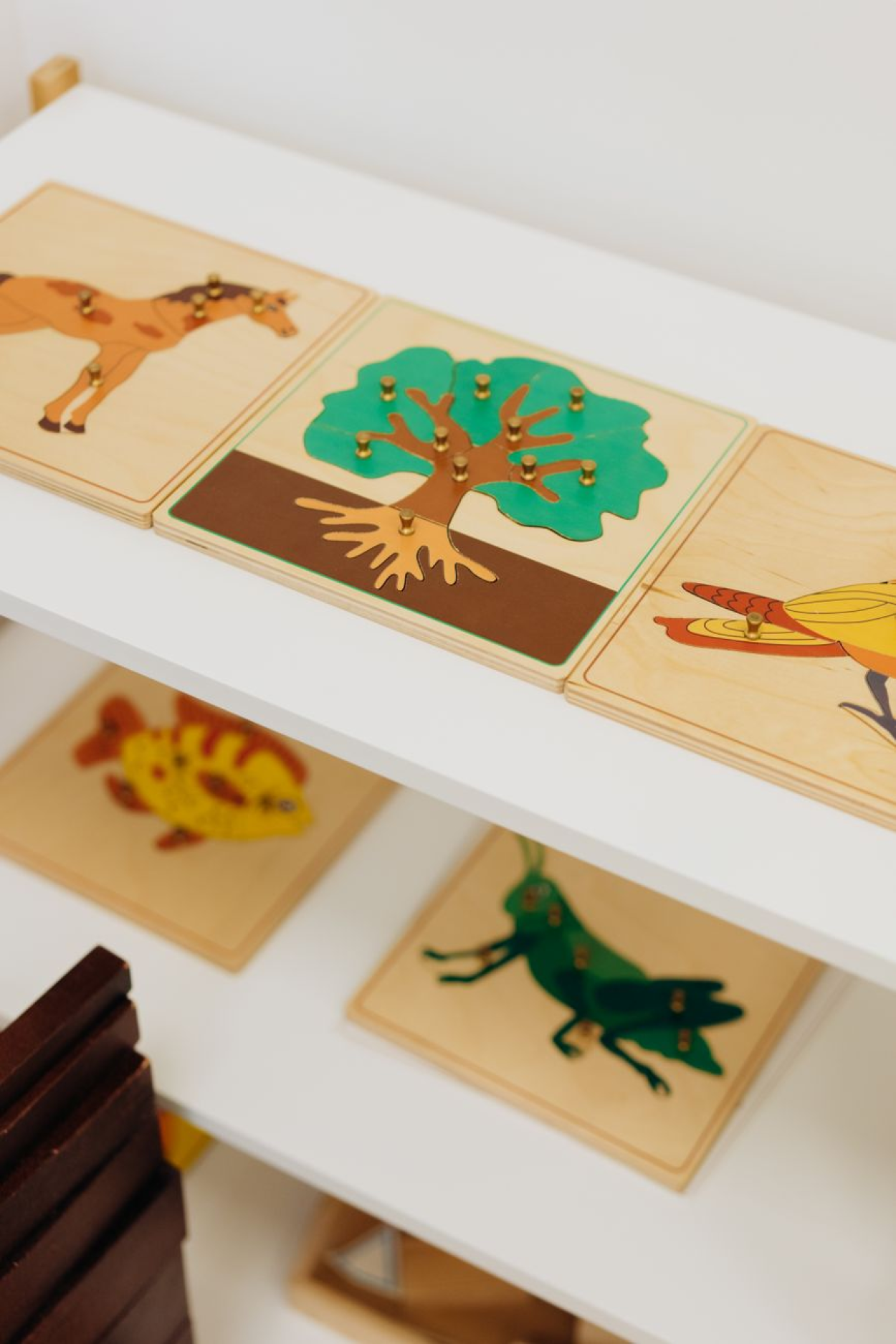
The Montessori classroom is intentionally prepared so children can act independently and confidently. Materials are accessible, orderly, and sequenced from simple to complex. Furniture is child-sized. Each activity has a clear purpose. The environment is not arranged for adult convenience first; it is arranged so children can participate in their own care, learning, and community life.
We often see families immediately notice the calm of an authentic Montessori environment, but the deeper difference is not just calmness. It is structure with freedom. Children are free to make meaningful choices within a well-prepared framework.
Authentic Montessori depends heavily on the adult role. Montessori Aotearoa New Zealand recommends that, at minimum, the lead teacher in a classroom holds a Montessori teaching qualification for the age group they teach and ideally that all staff either hold or are working toward Montessori qualifications. That matters because Montessori is not a loose style. It is a specialised approach that requires training in observation, presentation of materials, child development, and classroom leadership.
In our day-to-day work, we see that well-trained kaiako do not rush to correct, entertain, or over-direct. Instead, we observe carefully, prepare the next right lesson, protect concentration, and step in with purpose when needed. This is one of the clearest differences between authentic Montessori and more general preschool practice.
Authentic Montessori classrooms are typically organised in multi-year age groupings, especially in the 3 to 6 stage. This supports peer learning, leadership, patience, and a stronger sense of community. Younger children learn by watching older classmates. Older children strengthen their own understanding by helping others and modelling classroom norms.
We find that this mixed-age structure often gives children a more natural social experience than narrow age-banded rooms. It reflects real community life more closely and creates continuity over time.
One of the most important practical markers of authenticity is time. Montessori classrooms protect long, uninterrupted periods for self-chosen work. This is how children move beyond surface-level engagement into concentration, repetition, coordination, confidence, and satisfaction.
In contrast, many conventional preschool settings rely more heavily on frequent transitions, short activities, and adult-led group routines. Those structures may be common, but they can interrupt deep engagement. In our experience, families often underestimate how important sustained concentration is until they see what children can do when they are truly given time.
Montessori materials are not random learning aids. They are carefully designed tools with a developmental purpose, often isolating one concept or skill at a time. They invite repetition, hands-on discovery, movement, and increasing mastery.
Authenticity is not about owning a few recognisable materials. It is about using them as part of a coherent sequence, with lessons presented thoughtfully and followed by opportunities for independent practice.
Families sometimes assume Montessori means children can do whatever they want. In authentic practice, that is not the case. Children are offered meaningful choice within clear limits that protect safety, respect, order, and the rights of others.
We usually explain it this way: children have freedom to choose purposeful activity, freedom to move responsibly, and freedom to develop at their own pace, but not freedom to disrupt, misuse materials, or ignore community expectations.
Authentic Montessori supports cognitive, social, emotional, physical, and practical development together. Practical life activities, grace and courtesy, care of self, care of others, and care of the environment are not extras. They are core parts of early childhood development.
This is especially important for families comparing Montessori with school-prep messaging. In our experience, authentic Montessori does prepare children for school, but it does so by building independence, coordination, language, concentration, confidence, and social responsibility rather than chasing narrow academic performance alone.
In New Zealand, early childhood education sits within Te Whāriki, the national curriculum framework. The Ministry of Education describes Te Whāriki as supporting children to become confident learners for life, and it includes the full range of experiences, activities, and relationships within an early learning setting. For Montessori settings, authentic practice should sit comfortably within that broader framework rather than compete with it.
We see this as an important point for Wellington families. Authentic Montessori in Aotearoa is not about importing an isolated overseas model without context. It should be thoughtful, locally grounded, and responsive to children, whānau, and community. Te Whāriki also identifies Te Tiriti o Waitangi as a foundational document, reinforcing the importance of belonging, identity, language, culture, and partnership.
In practical terms, this means an authentic Montessori preschool in Wellington should not only be faithful to Montessori principles. It should also show how those principles are lived in a New Zealand setting through respectful relationships, culturally responsive practice, and meaningful engagement with whānau. Montessori Aotearoa New Zealand’s essential elements similarly emphasise that the culture and aspirations of whānau should be valued and that kaiako should respond appropriately to Māori and culturally diverse learners.
For many families, this combination matters. They are not choosing between Montessori and New Zealand early childhood values. They are looking for a centre that can integrate both with integrity.
When we speak with parents, we encourage them to look past marketing language and observe the lived reality of the classroom. A few practical questions can reveal a lot:
We also suggest families pay attention to how the centre talks about the child. Authentic Montessori settings usually speak in terms of development, independence, capability, observation, and respect, not just supervision, entertainment, or keeping children busy.
If you are exploring our approach, you can learn more about our learning environment, our approach and values, or contact us to arrange a conversation.
| Area | Authentic Montessori Preschool | More General Preschool Model |
|---|---|---|
| Learning structure | Child-led activity within a carefully prepared framework | Often a mix of free play and adult-planned activities |
| Classroom design | Prepared environment built for independence, order, and access | Environment may be flexible but not always systematically sequenced |
| Adult role | Observation, intentional guidance, individual presentations | More frequent direct instruction, group management, and transitions |
| Age grouping | Typically mixed-age, especially ages 3 to 6 | Commonly grouped by narrower age bands |
| Use of time | Uninterrupted work cycles that protect concentration | Often shorter activity blocks and more group transitions |
| Materials | Specialised materials used in developmental sequence | Broader range of play and learning resources without the same sequence |
| Independence | Explicitly taught through daily routines and classroom design | Encouraged, but often less central to the whole programme |
| Social learning | Grace and courtesy, peer modelling, responsibility in community | Social learning present, but often less embedded in the method itself |
If you are comparing childcare and preschool options, we recommend focusing on practice rather than labels. An authentic Montessori preschool should show consistency between what it says and what children actually experience each day.
Our practical advice is to look for these essentials:
In our experience, the right preschool feels purposeful. Children are not being hurried from one activity to another. They are building themselves through movement, choice, repetition, responsibility, and meaningful relationships.
This article was produced by our internal team at Montessori Children’s House. Our editorial approach draws on our day-to-day experience in early childhood education, our understanding of authentic Montessori practice, and our commitment to supporting Wellington families with practical, trustworthy guidance. We write from the perspective of practitioners working within Montessori early learning, informed by New Zealand curriculum expectations, ongoing professional reflection, and the real questions parents ask when choosing a preschool environment.