When families first hear both Te Whāriki and Montessori mentioned in the same conversation, they sometimes wonder whether the two approaches compete with each other. In our experience, they do not. In an authentic Montessori preschool, Te Whāriki is not something we bolt on afterwards. It is woven through the way we prepare the environment, guide children’s independence, build relationships with whānau, and design learning that respects each child’s pace, interests, identity, and culture.
At our Montessori programme, we see Te Whāriki and Montessori as deeply compatible. Te Whāriki provides Aotearoa New Zealand’s early childhood curriculum framework, while Montessori provides a carefully developed pedagogy, environment, and way of observing children. When these are understood properly, they strengthen each other rather than pull in different directions.
Te Whāriki is built around principles, strands, goals, and learning outcomes that support children to become confident and competent learners. It is intentionally broad and responsive, which means each early childhood service develops a local curriculum shaped by its people, place, and community. That flexibility matters. It allows an authentic Montessori preschool to remain true to Montessori practice while also fully enacting the expectations of early learning in Aotearoa New Zealand.
We typically explain it this way to families: Montessori gives strong practical form to many of the things Te Whāriki values most. For example, children are empowered through meaningful choice, holistic development is supported through integrated learning, family and community are part of the child’s experience, and relationships are central to how learning happens.
This is especially clear when we look at the shared emphasis on respectful teaching, responsive observation, purposeful environments, and the child as an active participant in their own learning. If you would like to understand more about our setting and how environment supports learning, you can also explore our learning environment.
One of the clearest signs of Te Whāriki in Montessori practice is empowerment through independence. In an authentic Montessori classroom, children are not kept dependent on adults for every step. Instead, we prepare the environment so they can choose purposeful work, carry materials, care for themselves, solve manageable problems, and participate meaningfully in the life of the classroom.
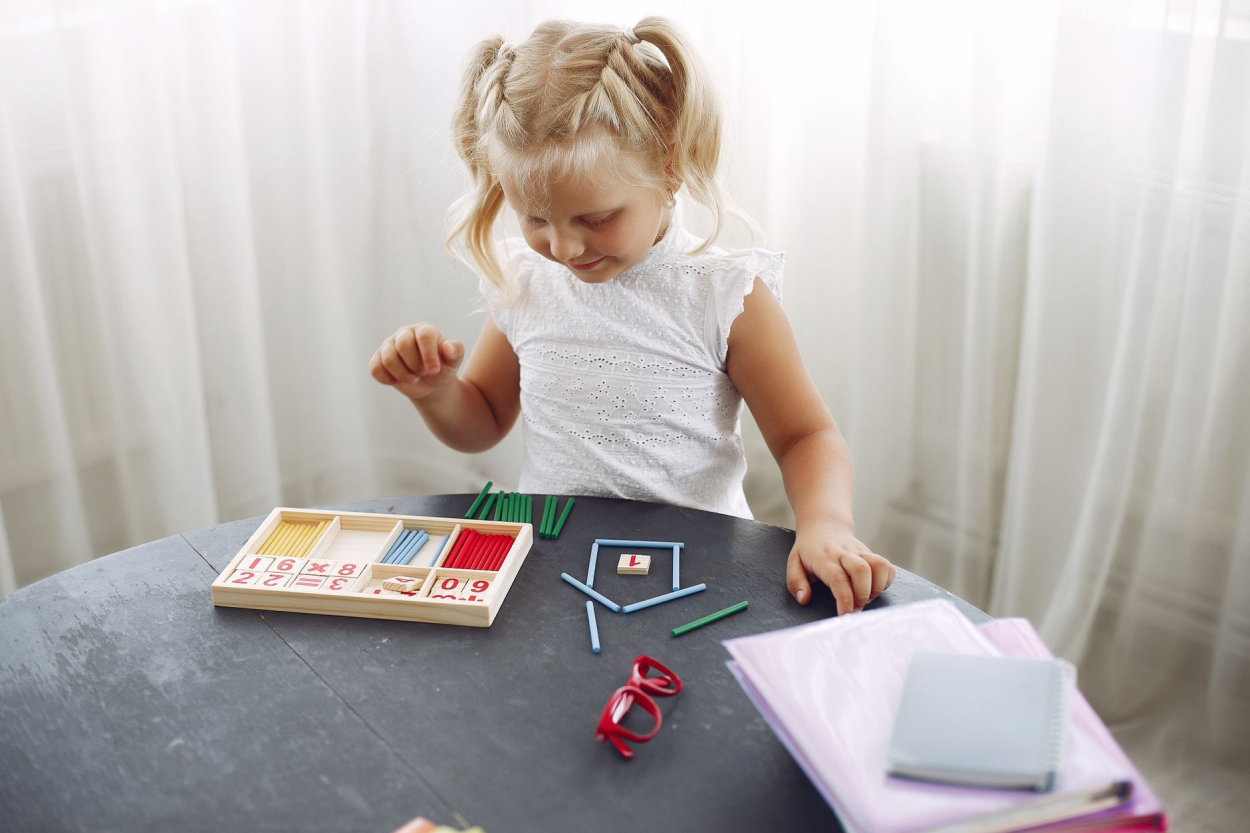
In practical terms, that may look like a child pouring their own water, rolling a mat, selecting a language activity, washing a table, preparing food, or returning materials independently. These are not small housekeeping tasks added for appearance. They are part of how we help children build agency, concentration, coordination, self-belief, and responsibility.
When empowerment is understood this way, Te Whāriki becomes visible in action rather than in slogans. We are not simply telling children they are capable; we are designing the day so they can experience themselves as capable.
Te Whāriki recognises that children learn and grow holistically. Montessori does the same. In our experience, authentic Montessori practice avoids fragmenting development into narrow academic targets too early. Instead, we support physical, social, emotional, cognitive, cultural, and practical development as interconnected.
A Montessori environment is carefully prepared so that movement, order, language, sensory exploration, early mathematics, practical life, and social learning all support one another. A child working with pouring, spooning, polishing, matching, sorting, or sound activities is not doing isolated tasks. They are building concentration, fine motor control, sequencing, independence, vocabulary, and confidence all at once.
This is one reason Montessori can align so naturally with Te Whāriki. Both approaches recognise that strong early learning is not produced by rushing children into formal instruction detached from real experience. It grows from rich, hands-on engagement with people, materials, language, place, and daily life.
Families sometimes associate belonging only with warmth and friendliness. Those matter, but in a Montessori preschool belonging is also built through consistency, clear expectations, mixed-age community, and an environment that children can understand and trust.
We often see children settle more deeply when they know where materials belong, what the daily rhythm feels like, how to move respectfully in the room, and how to contribute to the group. Predictability supports emotional security. Shared responsibility supports connection. Mixed-age learning supports peer modelling, leadership, patience, and care.
Belonging is also strengthened when children see themselves, their whānau, and the wider community reflected in the life of the centre. In Aotearoa New Zealand, this includes meaningful bicultural practice rather than token gestures. In an authentic setting, this should be evident in relationships, language, respect for place, and curriculum decisions, not just wall displays.
Te Whāriki places strong value on children as contributors to their world. In Montessori, contribution is woven into everyday life. Children help prepare food, care for plants, tidy shared spaces, greet others, wait for a turn, offer help, and participate in maintaining a calm and respectful community.
We think this matters because contribution in early childhood should not be reduced to occasional special events or adult-directed group performances. It should be part of daily practice. When children are trusted with real responsibility, they begin to understand that they matter to others and that their actions have value.
That sense of contribution is also social. In mixed-age environments, older children often support younger ones through modelling and gentle leadership, while younger children learn by observing capable peers. This creates a community in which contribution is natural and ongoing.
In an authentic Montessori preschool, communication includes spoken language, listening, movement, social cues, practical demonstration, storytelling, song, early writing and reading, and increasingly precise vocabulary. We pay close attention to the language children hear, the language we model, and the opportunities children have to express themselves clearly and confidently.
Montessori environments are rich in classified language, conversation, grace and courtesy lessons, storytelling, oral language development, and hands-on materials that support children to connect words with real experience. This supports communication in a broad Te Whāriki sense rather than narrowing it too quickly to worksheets or premature formal tasks.
For families, an important marker of authenticity is that communication is grounded in relationships and meaning. Children are not just being taught to repeat information. They are developing the ability to express needs, ideas, observations, questions, and growing understanding.
A common misconception is that Montessori is too structured to support exploration. In our experience, the opposite is true when Montessori is practised well. The structure exists so exploration can be deeper, calmer, and more sustained.
Children explore through movement, repetition, sensorial investigation, nature, early science experiences, practical life, mathematics, geography, art, music, and language. The adult’s role is not to entertain constantly or direct every step. Our role is to prepare, observe, connect the child with meaningful materials, and step back enough for concentration and discovery to emerge.
This is often where Te Whāriki becomes especially visible to visiting families. Exploration does not always look noisy or chaotic. Sometimes it looks like intense focus, repeated practice, close observation, and the satisfaction of mastering something real.
| Te Whāriki focus | What it looks like in an authentic Montessori preschool | Why it matters |
|---|---|---|
| Empowerment | Children choose purposeful work, care for themselves, and act independently within clear limits | Builds agency, confidence, and self-discipline |
| Holistic development | Practical, sensorial, social, language, movement, and early maths learning are interconnected | Supports the whole child rather than isolated skill training |
| Belonging | Consistent routines, mixed-age community, respectful relationships, and a secure environment | Helps children feel safe, valued, and connected |
| Contribution | Children help care for the classroom, support one another, and participate in community life | Develops responsibility and social awareness |
| Communication | Rich oral language, practical demonstrations, stories, vocabulary work, and respectful dialogue | Strengthens expression, listening, and understanding |
| Exploration | Hands-on materials, repetition, observation, and child-led discovery within a prepared environment | Encourages curiosity, concentration, and deep learning |
If you are trying to understand whether a setting genuinely reflects both Te Whāriki and Montessori, we suggest looking beyond labels. In our experience, authenticity shows up in the details of everyday practice.
These questions often reveal more than marketing language does. If you want to learn more about our philosophy and context, you can read about our team and approach.
When Te Whāriki is enacted well in an authentic Montessori preschool, it usually looks less like a checklist and more like a living culture of learning. We see it in the prepared environment, in the child’s growing independence, in respectful relationships, in meaningful bicultural practice, and in the way learning is observed and woven together over time.
For families, the key point is this: Montessori and Te Whāriki do not need to be in tension. When practised thoughtfully, Montessori can be a strong and authentic way of bringing Te Whāriki to life in daily preschool experience.
If you would like to see how this looks in practice, we welcome families to get in touch with our team.
This article has been produced by our internal early childhood education team at Montessori Children’s House. We write from our experience supporting children and whānau in an authentic Montessori setting in Aotearoa New Zealand, informed by Montessori pedagogy, day-to-day teaching practice, curriculum observation, and ongoing engagement with Te Whāriki. Our editorial approach is grounded in practical experience, professional reflection, and careful review of authoritative public guidance relevant to early learning.