
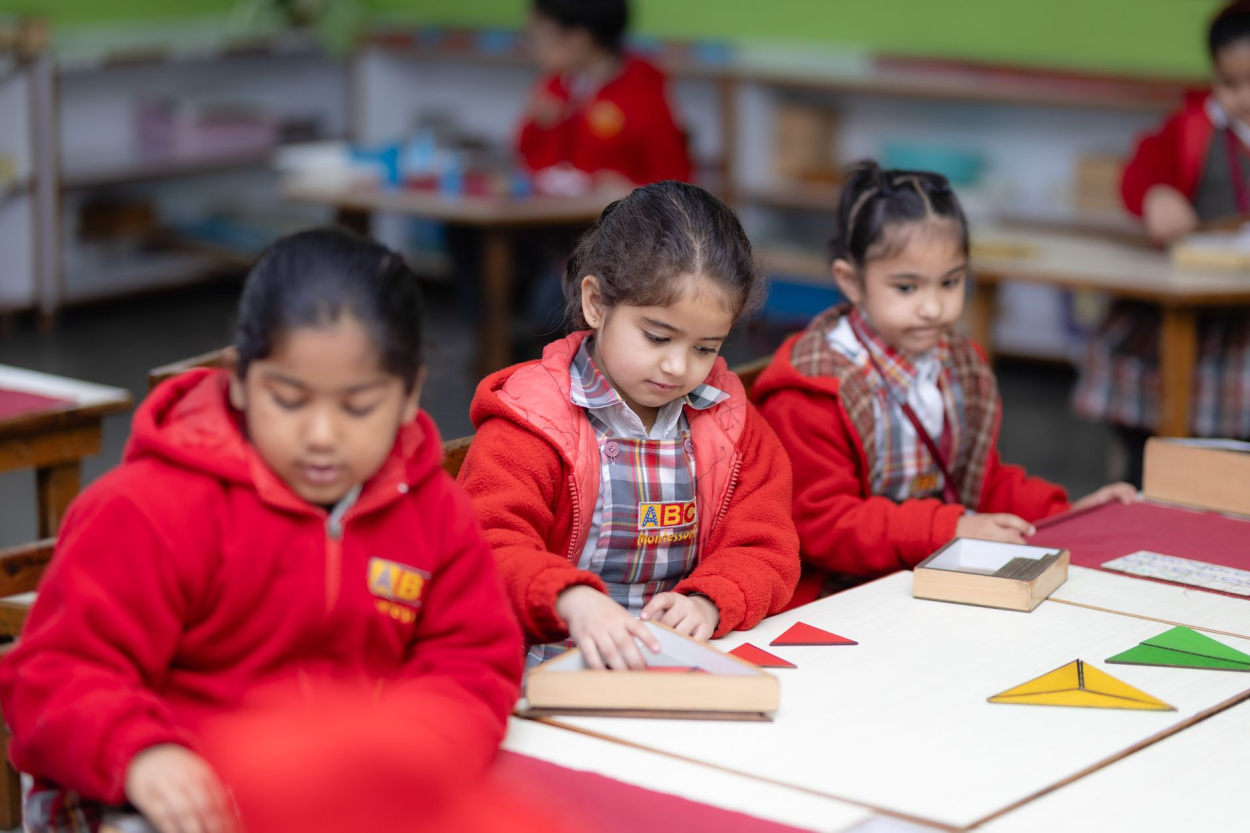
Choosing a preschool is one of the most important early education decisions a family can make. In our experience, many Wellington parents are drawn to Montessori because they want calm, purposeful learning, mixed-age community, and a setting that respects each child’s pace of development. The challenge is that not every centre using the word “Montessori” delivers an authentic Montessori programme.
When we talk with families, we encourage them to look beyond branding, décor, or marketing language. Authentic Montessori is not just wooden materials on shelves. It is a complete educational approach built around a carefully prepared environment, trained adults, uninterrupted work cycles, child-sized independence, observation-based teaching, and deep respect for the child. In Aotearoa New Zealand, it should also sit meaningfully alongside Montessori education, Te Whāriki, and commitments shaped by the Treaty of Waitangi.
If you are comparing options in Wellington, this guide sets out what we believe families should look for, what questions to ask, and which signs usually distinguish an authentic Montessori preschool from a centre that simply borrows the name.
Authenticity matters because Montessori works best when its parts operate together as a whole. We often see parents focus on one visible feature such as self-directed play or specialised materials, but those features alone do not make a programme Montessori. A genuine Montessori setting should be intentionally structured so children can build concentration, coordination, independence, social awareness, and confidence through repeated, meaningful work.
In the New Zealand context, early learning also needs to align with Te Whāriki, which frames curriculum broadly around the experiences, activities, and relationships that shape children’s learning. That means an authentic Montessori preschool should not feel disconnected from local curriculum expectations or bicultural practice. Instead, we would expect to see Montessori principles expressed in a way that supports belonging, communication, contribution, wellbeing, and exploration within the life of the centre.
When we assess Montessori authenticity, the environment is one of the first things we look at. The room should feel orderly, calm, accessible, and purposeful rather than crowded or overstimulating. Materials should be arranged by learning area, displayed in sequence, and placed where children can independently choose, use, and return them.
In an authentic setting, furniture is child-sized, movement is supported, and the layout helps children work with focus. The environment should invite independence at every level, from putting away work to caring for personal belongings and participating in everyday routines. You can learn more about how environment shapes learning by exploring our place.
Many parents have seen photos of Montessori materials, but in practice what matters is how they are used. Authentic materials are not random toys. They are sequenced learning tools presented carefully by trained adults. Each material isolates a concept or skill and supports repetition, concentration, and mastery.
During a visit, we suggest noticing whether materials appear complete, well maintained, and actively used by children. Ask how presentations are introduced, how children progress, and how teachers observe readiness for the next lesson. If staff cannot explain the purpose of core materials or if the room relies mainly on open-ended toy rotation with a few Montessori-looking items mixed in, that is usually a sign the programme may not be strongly Montessori in practice.
One hallmark of authentic Montessori is mixed-age community. In early childhood, this typically means children learning across a wider age range rather than being separated into narrow year-based cohorts. We value mixed ages because younger children learn by observing older peers, while older children strengthen confidence and leadership through helping others.
When this is working well, the classroom feels like a small community rather than a set of same-age stations. Children are not expected to move in lockstep. Instead, they develop at different rates within a shared environment that supports continuity and social learning.
This is one of the most important questions families can ask. Montessori Aotearoa New Zealand states that, at a minimum, the lead teacher in a Montessori classroom should hold a Montessori teaching qualification for the age group they teach, and ideally all staff are qualified or working towards it. That recommendation matters because Montessori is a specialised pedagogy, not just a general philosophy.
We recommend asking directly: Who in the classroom has Montessori training? Was that training specific to the preschool years? How is consistency maintained when other staff are present? Families can also read more about our team’s approach on our About page.
Authentic Montessori relies on long, uninterrupted periods of work so children can settle, choose, repeat, and complete activity with deep concentration. If the day is constantly broken up by whole-group transitions, adult-led timetable changes, or frequent entertainment-style activities, children have less opportunity to develop sustained attention.
When we help families evaluate a centre, we suggest asking what a typical morning looks like. A Montessori programme should make room for meaningful independent work rather than running the day as a series of short, adult-directed sessions.
A strong Montessori classroom is calm, but it is not passive. Teachers observe carefully, model clearly, and step in thoughtfully. We believe families should look for educators who speak respectfully, protect concentration, and guide behaviour with consistency rather than control. The adult’s role is to prepare the conditions for learning and intervene with purpose, not dominate every moment.
During visits, notice whether children seem hurried, interrupted, or overly dependent on adults for basic tasks. In an authentic Montessori setting, independence is taught deliberately and supported daily.
One of the clearest signs of authenticity is meaningful practical life work. Children should be doing real tasks: pouring, washing, polishing, preparing food, caring for plants, sweeping, dressing, and managing their own routines. These activities are not filler. In our experience, they are foundational because they build coordination, order, persistence, and self-belief.
If practical life is missing or reduced to pretend play only, the programme may be missing one of Montessori’s core pillars.
Authentic Montessori teachers observe each child closely and tailor presentations accordingly. We would expect a centre to explain how teachers track readiness, respond to sensitive periods, and support individual progress without forcing children into the same timetable.
That does not mean there is no structure. It means structure is used intelligently. Children should be challenged, but not rushed.
In Wellington and across Aotearoa New Zealand, authenticity is not just about Montessori purity in isolation. We believe a high-quality Montessori preschool should also show how its programme connects meaningfully with Te Whāriki and reflects bicultural commitments in everyday practice.
That includes genuine respect for whānau, inclusive relationships, and visible acknowledgement of te ao Māori in ways that are thoughtful rather than tokenistic. Families can ask how the centre weaves Te Whāriki into observation, planning, and environment design, and how Treaty of Waitangi commitments are reflected in the life of the preschool.
Over time, we have found that a few warning signs come up repeatedly when families compare centres.
| Area | What we would expect in an authentic Montessori preschool | Potential warning sign |
|---|---|---|
| Environment | Orderly, calm, child-sized, purposeful, and accessible | Cluttered, overstimulating, adult-arranged only |
| Materials | Sequential Montessori materials used through careful presentation | Montessori-style toys without clear purpose or progression |
| Teachers | Lead teacher has Montessori training for the age group taught | General ECE background only, with limited Montessori knowledge |
| Daily rhythm | Long uninterrupted work periods for concentration and repetition | Frequent transitions and mostly group-led sessions |
| Child independence | Children choose work, care for self, and participate in routines | Adults do most tasks for children |
| Practical life | Real everyday activities embedded in the programme | Minimal practical life or only pretend versions |
| Curriculum fit | Montessori practice thoughtfully aligned with Te Whāriki | No clear explanation of local curriculum integration |
| Bicultural practice | Respectful, lived commitment to Aotearoa New Zealand context | Token gestures without day-to-day depth |
If we were giving a Wellington family a short checklist, it would be this: visit in person, observe a normal part of the day, ask who is Montessori trained, look for uninterrupted work, and pay close attention to how children move, choose, and relate in the environment. Authentic Montessori should be visible in the details, not just in the name.
We also encourage families to trust what they notice. If a space feels calm, purposeful, respectful, and clearly designed for children to do things for themselves, that is often a good sign. If it feels performative, overly adult-directed, or unclear in its educational approach, keep asking questions.
If you would like to understand how we approach authentic Montessori in Miramar, Wellington, we invite you to explore our Montessori approach, see our learning environment, or contact us to arrange a conversation.
This article was produced by our internal early childhood education team at Montessori Children’s House. We write from hands-on experience in Montessori preschool practice, daily work with tamariki and whānau, and ongoing engagement with Te Whāriki, bicultural early learning expectations, and the realities families consider when choosing care and education in Wellington. Our editorial approach combines practical operational insight with review of relevant public guidance so the advice we share is useful, grounded, and trustworthy.