
In a Montessori classroom, Sensorial materials are far more than colourful wooden blocks or interesting objects to explore. They are carefully designed learning tools that help children organise, refine and understand the world around them through sight, touch, sound, smell and taste.
During the early years, a child's brain is developing at an extraordinary pace. Every experience they have helps build important neural connections. By engaging all five senses, Sensorial activities support this development in a meaningful, hands-on way that lays the foundation for future academic learning.
Sensorial materials encourage children to observe carefully and recognise differences that might otherwise go unnoticed.
Whether they are grading colours from light to dark, comparing different textures, identifying sounds, or arranging objects by size, children are developing the ability to classify, compare and discriminate between qualities.
These seemingly simple activities strengthen concentration, attention to detail and logical thinking—skills that will later support mathematics, reading, writing and scientific thinking.
Many Montessori Sensorial materials introduce mathematical concepts long before children begin formal maths lessons.
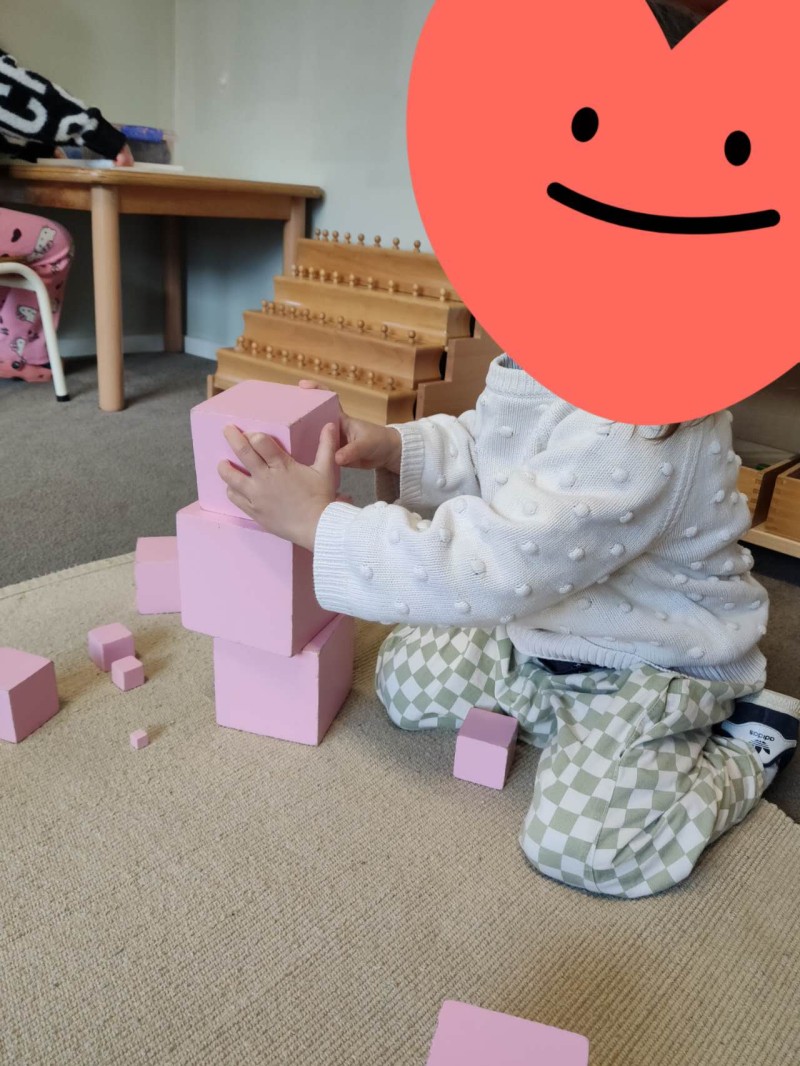
When children work with materials such as the Pink Tower or Brown Stair, they are unconsciously exploring concepts including:
Later, these experiences make mathematical ideas feel familiar because children have already experienced them physically.
Sensorial activities also play an important role in language development.
Children learn to describe what they observe using increasingly precise vocabulary:
As they refine their senses, they also refine their language. Rich vocabulary and careful observation become valuable foundations for reading comprehension and expressive communication.
One of the beautiful aspects of Montessori Sensorial work is that children often become deeply engaged.
The materials contain a built-in "control of error," allowing children to notice and correct many mistakes independently. Rather than relying on an adult for every answer, children develop confidence through problem-solving and self-discovery.
This independence nurtures resilience, perseverance and intrinsic motivation.
Young children learn best by doing.
Instead of being told that one object is heavier or another is smoother, Montessori encourages children to experience these differences directly.
This concrete experience creates stronger understanding because learning is connected to real sensory experiences rather than abstract explanations.
Sensorial education is about much more than preparing children for school.
It helps children:
These are lifelong skills that continue to benefit children well beyond the early years.
At Montessori Children's House - Wellington. Sensorial activities are woven into each child's daily learning experience. Our carefully prepared environment encourages children to explore, discover and learn at their own pace, building confidence through meaningful hands-on experiences.
We believe that when children are given the opportunity to learn through their senses, they develop not only academic readiness but also curiosity, independence and a genuine joy for learning that lasts a lifetime.
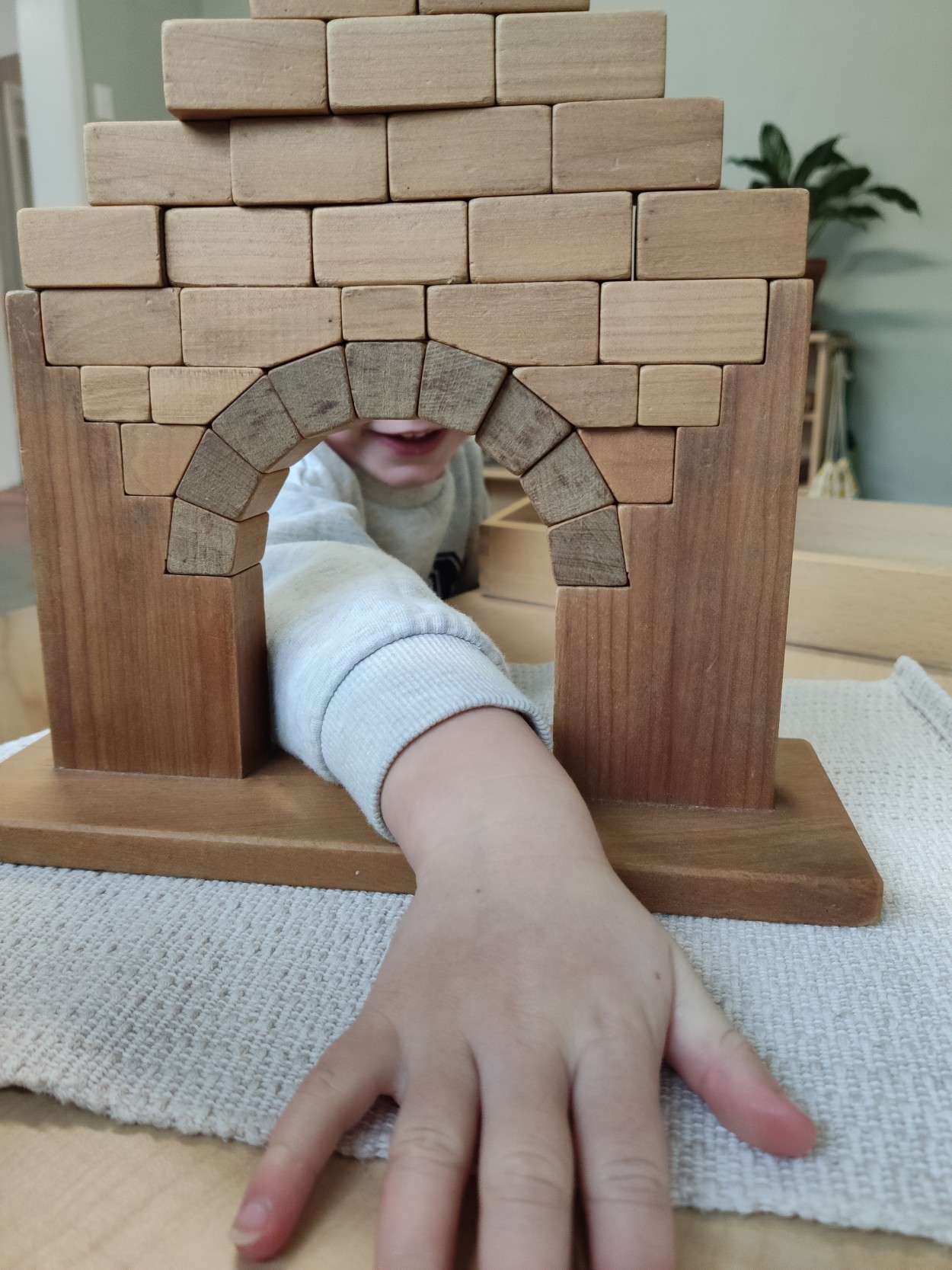
 Child exploring the Montessori Roman Arch, developing balance, problem-solving and an understanding of structural design.
 Child working with the Montessori Pink Tower to develop coordination and visual discrimination.
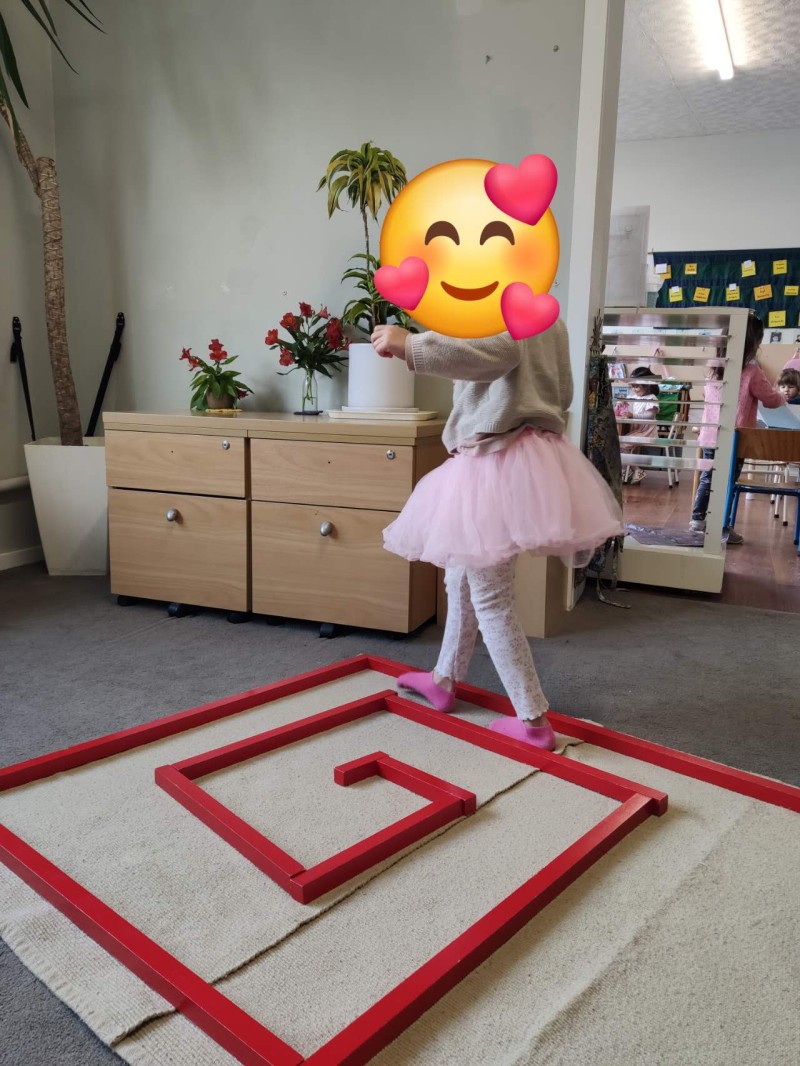
 Child practising the Montessori Walking on the Line activity, developing balance, coordination and body awareness.